





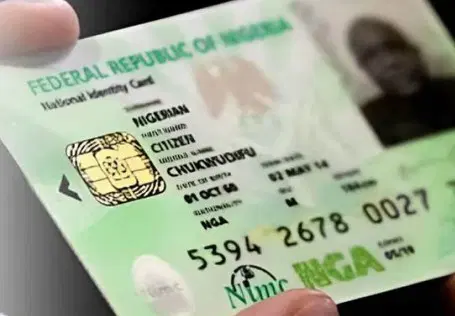
Nigeria’s NIN integration programme has come under renewed scrutiny following contrasting views between the National Identity Management Commission (NIMC) and citizens, technology experts and banking professionals over the effectiveness of the country’s digital identity system. While NIMC maintains that the National Identification Number (NIN) now serves as Nigeria’s master identity across public and private institutions, many users say they continue to face repeated data requests, record inconsistencies and costly correction processes.
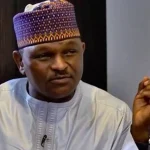
Speaking during the ID4Africa Annual General Meeting in Abidjan, Côte d’Ivoire, and in a subsequent interview with Saturday Vanguard, the Director-General of NIMC, Engr. Abisoye Coker-Odusote, said Nigeria had moved beyond fragmented identity databases through use-case-based integration. She stated, “We no longer have fragmented databases in place because we have been able to integrate based on use cases.” She added, “The NIN is the master ID, which means your sectoral ID only works for that sector. Like BVN only works for the financial sector. However, the NIN works for all the sectors.”
According to NIMC, agencies responsible for taxation, immigration, healthcare, education, security, aviation and social intervention programmes, alongside banks, telecommunications companies, insurance firms and fintechs, now rely on the NIN for identity authentication through a real-time verification platform. The commission said authorised institutions can retrieve verified identity information after biometric authentication rather than requiring citizens to repeatedly submit personal information.
Despite these claims, experiences shared by some Nigerians indicate that practical challenges remain. David Omobola recounted being required to complete forms containing personal details while opening a bank account despite presenting his NIN. He said, “I recently opened a First Bank account and had to provide all my details again, my name, age, date of birth and other information, even after giving them my NIN.” According to him, “I don’t think they have fully integrated NIN into the systems of government agencies and private organisations yet. If they had, there would be less need for people to keep submitting the same information everywhere they go.”
Another user, Mrs. Mercy Obadare, described the financial and administrative burden of correcting conflicting records after discovering that her date of birth on her NIN differed from her international passport. She said repeated visits to the NIMC office in Alausa-Ikeja, Lagos, were unsuccessful because the server remained unavailable for several months. “Six months later, when the server came back, they started the revalidation process and asked me to pay more than N40,000. By the time I completed everything, I had spent over N80,000,” she said, adding that the discrepancy also affected her Permanent Voter’s Card.
Technology and financial sector experts acknowledged progress while maintaining that full NIN integration has not yet been achieved. Founder of Afri Invoice, Mark Odenore, said many organisations still depend on costly third-party application programming interfaces to verify identities and that stronger collaboration among institutions is needed. LOTUS Bank Chief Digital Officer Akin Adegoke said the NIN has improved customer onboarding but noted that record reconciliation and validation are still required because updates are not fully synchronised across systems.
Technology policy analyst Wonder Akpeki argued that Nigeria currently operates “a federated linkage system with a shared identifier, not a fully integrated identity ecosystem,” while Amaka Onyemenam, adviser at Africa Practice, said the country has achieved “substantial linkage and partial interoperability, but not yet the level of interoperability implied by a fully integrated identity ecosystem.” The differing assessments suggest that although Nigeria has made measurable progress in building a national digital identity infrastructure, achieving seamless interoperability across institutions remains an ongoing process.