


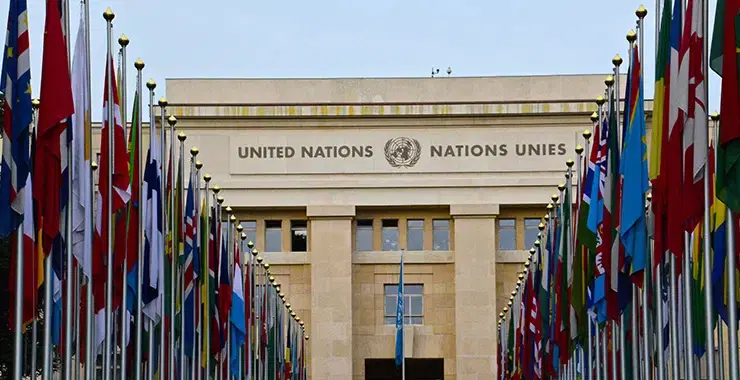
The United Nations General Assembly is scheduled to vote on a draft resolution that seeks to designate the transatlantic African slave trade as the “gravest crime against humanity,” proponents said as the initiative was promoted at UN headquarters in New York City.
The transatlantic slave trade involved the forced removal and enslavement of millions of Africans over approximately 400 years, shaping economic and social patterns across continents. More than 12 million Africans were transported across the Atlantic during that period.
The proposed resolution is supported by Ghana’s President John Dramani Mahama, a vocal advocate for recognizing the historical wrongs of the slave trade and advancing what proponents describe as restorative justice.
Mahama visited the United Nations to promote the measure and underline its significance ahead of the scheduled vote.
The draft resolution calls on the General Assembly to declare that “the trafficking of enslaved Africans and racialized chattel enslavement of Africans” constitutes the gravest crime against humanity.
Proponents say the text highlights the “persistence of racial discrimination and neo‑colonialism” as enduring legacies of the transatlantic slave trade that continue to affect contemporary societies.
In remarks delivered at the United Nations, Mahama described the initiative as a step toward bearing witness to the plight of more than 12.5 million men, women and children whose lives and communities were disrupted over the course of the slave trade. He called the measure “a safeguard against forgetting.”
The resolution encourages nations involved in the historic slave trade to engage in what proponents describe as steps toward restorative justice.
Ghanaian Foreign Minister Samuel Okudzeto Ablakwa told the Agence France‑Presse (AFP) that the resolution supporters expect European countries and the United States, identified as key participants in the transatlantic slave trade, to “formally apologise to Africa and to all people of African descent.”
Ablakwa said one pathway toward restorative justice could include the return of looted artifacts to African countries.
He also urged continued institutional efforts to address structural racism and suggested that compensation could be considered for those affected by the trade.
The resolution’s text points to the known identities of historic perpetrators and asks states to confront the consequences of the trade by engaging in constructive dialogue on pathways to repair and reconciliation.
Supporters of the resolution contend that formally naming the transatlantic slave trade as the gravest crime against humanity will reinforce global acknowledgement of its systemic nature and enduring impact.
Proponents stress that the measure is intended to recognise historical realities rather than assign prioritised suffering.
Critics of similar proposals in the past have raised concerns about how language in resolutions might be interpreted, including fears of creating hierarchies of suffering.
Ablakwa responded to such criticism by saying the term “gravest crime” aims to capture the systemic and prolonged nature of the transatlantic slave trade without denigrating other violations of human rights.
If adopted, the resolution would symbolically reaffirm the international community’s recognition of the transatlantic slave trade’s historical significance and its long‑term global consequences.
Observers have noted that symbolic acts at the UN can shape diplomatic and educational efforts, reinforce collective memory, and influence discussions about justice and equality.
The initiative has drawn interest from regional groups such as the African Union and nations that have been active in discussions on reparations and historical accountability.