



President Bola Tinubu’s directive to the Economic and Financial Crimes Commission (EFCC) to withdraw its freeze order on the Osun State Government’s bank account has triggered renewed debate over the agency’s independence and its relationship with the presidency. The controversy followed the President’s order on Thursday that the EFCC should return to court and vacate the order restricting access to the state government’s account.
Tinubu said the commission acted within its statutory authority but faulted the timing of the action, which came days before the August 15 governorship election in the state. The President said he was “deeply embarrassed” by the development because actions taken by federal agencies are often associated with the presidency.
The EFCC had earlier defended the account restriction as a routine enforcement measure and denied any political motive. Its Director of Public Affairs, Wilson Uwujaren, said the commission had previously imposed similar restrictions on the Edo State Government’s accounts ahead of the 2024 governorship election.
He explained that the EFCC could restrict an account for up to 72 hours without obtaining a court order, maintaining that its action remained within its legal powers. However, Tinubu’s intervention has generated questions about whether the President has the authority to issue operational directives to an independent anti-corruption agency.
Senior Advocate of Nigeria, Oba Maduabuchi, said the President does not have statutory powers to control the EFCC or the Independent Corrupt Practices and Other Related Offences Commission (ICPC). He, however, described the President’s intervention as understandable given the possibility that the account freeze could be interpreted as an attempt to influence the election.
Maduabuchi criticised the manner in which the intervention was made, arguing that the matter should have been handled through the Attorney-General of the Federation rather than through a direct public directive from the President. He also questioned the decision to freeze the entire state account instead of pursuing funds allegedly diverted from government coffers.
“Go after the money. Leave Osun State. The one that is in the account is not missing. Go after the one that has left the account,” he said.
The episode has also attracted criticism from opposition figures. The African Democratic Congress (ADC), through its National Publicity Secretary, Bolaji Abdullahi, welcomed Tinubu’s directive but said aspects of the President’s explanation raised fresh questions.
Abdullahi particularly questioned Tinubu’s reference to a court order authorising the freezing of the accounts. He noted that the EFCC had not publicly cited such judicial approval when defending its action, instead relying on its statutory and preventive powers.
“If such an order exists, why was it never mentioned by the EFCC in its statement?” Abdullahi queried, saying the circumstances were disturbing.
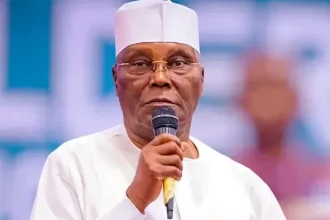
Former Vice President Atiku Abubakar also condemned the account freeze, describing it as a threat to democratic governance when carried out shortly before an election.
In a statement by his Senior Special Assistant on Public Communication, Phrank Shaibu, Atiku argued that restricting access to a state’s principal operational account could disrupt salary payments, public services and other government activities.
He warned that anti-corruption agencies must avoid actions that create the perception that state institutions are being used to influence electoral outcomes.
Atiku further accused the Federal Government of adopting coercive measures against opposition-controlled states, citing the withholding of Osun’s statutory local government allocations. He urged opposition parties and Nigerians committed to constitutional democracy to resist what he described as a dangerous trend.
The former vice president subsequently challenged Tinubu to similarly direct the ICPC to release former Kaduna State Governor Nasir El-Rufai. According to Atiku, the President’s intervention in the Osun matter had weakened claims that Nigeria’s anti-corruption agencies operate independently of the presidency.
“Executive control disguised as independence” was how he characterised the situation, arguing that the President could not deny interference in EFCC operations while directing the commission on what action to take.
The controversy has therefore shifted beyond the Osun account itself, with questions now focusing on the constitutional limits of presidential authority, the independence of anti-corruption institutions and the extent to which federal agencies should exercise their powers during politically sensitive periods.
The development is likely to sustain debate over how Nigeria can strengthen institutional independence while ensuring that anti-corruption agencies remain accountable and insulated from political influence.