






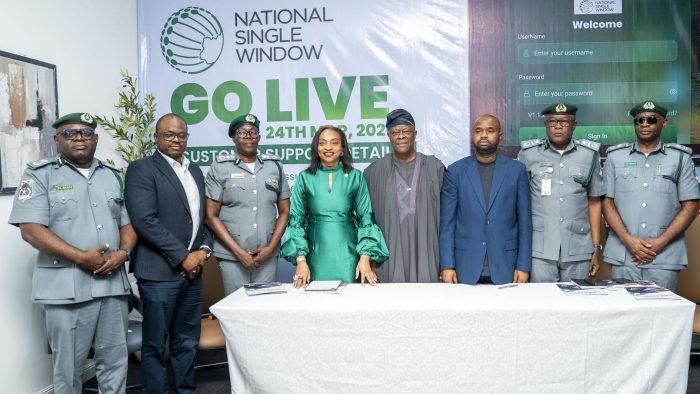
The NSW goes live at DHL operations in Apapa saw the commencement of electronic cargo manifest submissions to the National Single Window platform, despite initial system glitches that were resolved by technical teams during a live transmission event.
The development marks an important step in deploying the digital trade facilitation platform designed to enhance transparency and efficiency in cargo processing across Nigeria’s trade ecosystem.
The National Single Window (NSW) is a digital trade platform aimed at overhauling Nigeria’s trade facilitation architecture by enabling stakeholders to submit and transmit cargo manifest data electronically to multiple regulatory agencies through a single portal.
The initiative is part of broader efforts to modernise trade processes, reduce delays, and improve data accuracy across port and airport terminals.
During the launch at the DHL office in Lagos and the Apapa NSW office, the system experienced some transmission setbacks linked to a recent password update, but technical teams worked jointly to address the issues.
At the live demonstration, reporters observed several failed attempts. 11 in total before successful uploads of cargo manifest data were completed, attributed to glitches caused by an update to the system’s security credentials.
Technical teams promptly identified the cause and resolved it, allowing transmissions to proceed.
Senior Gateway Manager of DHL, Davids Malachi, explained that the password update had caused temporary delays in transmitting manifests on the NSW platform, but assured stakeholders that the issue had been addressed.
Following initial uploads, the system progressed to the next operational stage, involving the generation of rotation numbers which are essential identifiers that enable further cargo processing and assessment within the trade logistics chain.
Officials confirmed that the first consignment had successfully secured its rotation number, moving cargo processing forward.
Representatives from the National Single Window Project, Nigeria Customs Service (NCS), and the Federal Airport Authority of Nigeria (FAAN) were present during the session to oversee and monitor the live operations.
The Director of the NSW Project, Tola Fakolade, said the live demonstration was part of efforts to show logistics operators and regulators how the platform operates, noting that collaboration among stakeholders facilitated prompt resolution of the initial glitches.
Deputy Comptroller General of the NCS in charge of ICT and Modernisation, Oluyomi Adebakin, acknowledged the temporary disruption caused by the system update but emphasised that such challenges are expected in projects of this scale and highlighted the responsiveness of technical teams.
Adebakin said the Customs Single Window unit, the NSW technical team, and the Trade Modernisation Project staff were on the ground working collaboratively to ensure seamless operations on the platform.
FAAN’s Director of Cargo Development and Services, Lekan Thomas, said the NSW rollout at the airport would improve cargo efficiency, strengthen security, and support data-driven planning across aviation and trade sectors.
Thomas said the platform’s harmonisation of data across agencies would address longstanding inconsistencies, enabling better coordination and decision-making, which could boost national revenue and operational efficiency.
The Managing Director of DHL, Muyiwa Adejeyoju, reiterated the logistics firm’s commitment to supporting government efforts to modernise trade processes and expressed pride in participating in the initiative’s rollout.
The development where NSW goes live at DHL highlights progress in Nigeria’s digital trade transformation, demonstrating the potential to reduce cargo handling bottlenecks, improve transparency, and streamline interactions between private sector operators and regulatory agencies.
The swift resolution of initial glitches underscored the importance of inter-agency collaboration and technical readiness in deploying complex digital platforms.
The project’s success could support Nigeria’s trade competitiveness, enhance efficiency in cargo clearance, and align operations with continental frameworks such as the African Continental Free Trade Area (AfCFTA).