





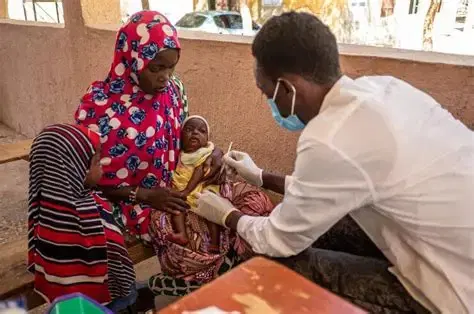
Fresh concerns have emerged over the widening Nigerian children immunisation gap, with an estimated 2.1 million children yet to receive any vaccine across the country. The development was highlighted during activities marking World Immunisation Week 2026, where stakeholders called for urgent action to address systemic barriers. The growing number of missed vaccinations underscores the challenges facing Nigerian children immunisation efforts nationwide.
Global health agencies continue to emphasise routine immunisation as one of the most effective public health interventions for preventing childhood diseases. However, disruptions in healthcare delivery systems, combined with access limitations and socio-economic factors, have contributed to declining vaccination coverage in several countries.
Nigeria has consistently ranked among countries with the highest number of zero-dose children, defined as those who have not received any routine vaccines. This status reflects persistent structural gaps in healthcare access, particularly in underserved urban and peri-urban communities.
According to data cited by Save the Children Nigeria, about 2.1 million children in the country have never received a single vaccine, while an additional 2.3 million are only partially immunised. These figures place Nigeria among countries with the highest burden of unimmunised children globally and the second-highest number of zero-dose children worldwide.
The organisation called for coordinated efforts involving government, partners, and communities to strengthen routine immunisation systems. It emphasised the need to expand outreach services in underserved areas, improve data systems, and ensure consistent follow-up on missed vaccinations.
Stakeholders also highlighted several barriers affecting Nigerian children immunisation, including limited access to healthcare services, weak data tracking systems, misinformation, and harmful social norms. These challenges have contributed to gaps in vaccine coverage across multiple regions. In response, experts recommended increased investment in primary healthcare, improved training for health workers, and stronger community engagement strategies to rebuild trust and expand vaccination coverage.
The rising number of missed vaccinations in Nigerian children immunisation efforts raises concerns about potential outbreaks of vaccine-preventable diseases such as measles and polio. Public health experts note that sustained gaps in immunisation coverage can weaken herd immunity and increase disease transmission risks.
The situation also highlights broader health system challenges, including inequities in access and resource allocation. Addressing these issues is critical to improving child survival rates and achieving national and global health targets.