

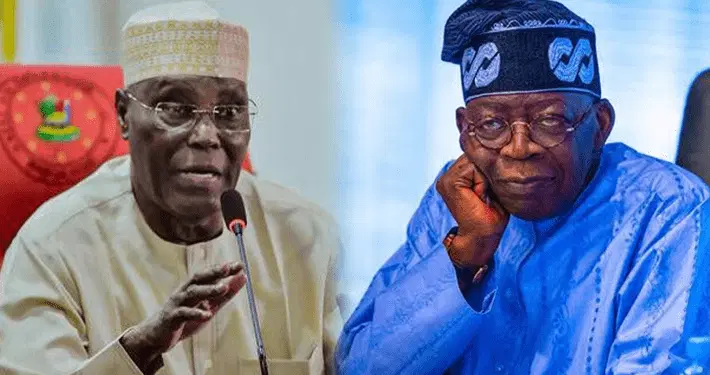
Former Vice President Atiku Abubakar has said President Bola Tinubu cannot stop his plan to introduce a targeted fuel subsidy for Nigerians.
Atiku, the presidential candidate of the African Democratic Congress, ADC, made the declaration in a statement issued in Abuja on Sunday by his Senior Special Assistant on Public Communication, Phrank Shaibu.
He accused the Tinubu administration of presenting fuel subsidy removal as an economic reform while allegedly maintaining fiscal concessions for oil investors.
Atiku argued that the government’s position was contradicted by the audited accounts of the Nigerian National Petroleum Company Limited, NNPC. According to him, NNPC recorded about ₦4.84 trillion as energy-security expenses and related shortfalls in 2023, while the figure rose to approximately ₦7.13 trillion in 2024.
He said the expenditure reflected government intervention in the petroleum price structure despite the declaration that fuel subsidy had been removed. Atiku said changing the terminology from subsidy to “shortfall” or “energy security” did not alter the economic reality.
“Nigerians do not eat semantics. Whether government calls it subsidy, under-recovery, shortfall or energy security, public resources were being used to bridge a gap between economic cost and the price at which petrol was sold.”
He maintained that his proposed intervention would differ from the previous subsidy regime, which he described as opaque and prone to corruption. According to Atiku, his targeted fuel subsidy proposal would be capped, transparently budgeted and independently audited, with a defined exit mechanism.
He also proposed accelerated domestic refining, increased competition, improved mass transportation and measures aimed at restoring household purchasing power. The former Vice President further criticised the government for providing incentives to oil companies while Nigerians face rising living costs.
He referenced the Deep Offshore Oil and Gas Projects Incentives framework, which provides qualifying petroleum projects with production tax credits beginning at $3 and $4.50 per barrel. Atiku questioned why similar economic protection could not be extended to households struggling with fuel costs.
He also demanded that the Federal Government disclose petroleum tax concessions already granted, including beneficiaries and the revenue allegedly forgone. The ADC candidate accused the administration of applying different economic standards to corporations and ordinary Nigerians.
He argued that government intervention should not be considered unacceptable when it protects citizens from severe economic hardship. Atiku insisted that his proposed targeted fuel subsidy would be accompanied by safeguards designed to prevent abuse and ensure public accountability.
He concluded by accusing the administration of pursuing what he described as “economic apartheid,” arguing that corporations were receiving concessions while Nigerian families were being asked to bear the full burden of economic reforms.