






Across the South-East, traders and residents are grappling with rising commodity prices, weaker consumer spending and increasing business costs, with many calling for urgent government intervention to ease economic pressure.
From Aba and Umuahia in Abia State to Onitsha, Awka and Nnewi in Anambra, Enugu, Abakaliki and Owerri, traders reported declining sales, higher transportation expenses, fuel costs, multiple levies and shrinking profit margins. Many said customers who once purchased goods in bulk now buy only what they can afford for immediate needs, leaving some businesses struggling to recover their capital.
In Aba, residents said staple foods including rice, beans, yam, tomatoes, garri, pepper and onions had become increasingly expensive.
A housewife, Oluchi Nwankpa, said the amount she previously spent preparing soup for her family of five could no longer produce what she considered enough food to last a week. At Cemetery Market, trader Ada Emeka-Ogbugo said suppliers had continued to increase their prices, citing higher production and transportation costs.
“Prices of goods have continued to increase in the market. Whatever commodity you buy at a particular time must have an increase the next day,” she said.
Another trader, identified as Friday, said many consumers were now focused primarily on meeting basic food needs.
“You can observe that people are only interested in buying foodstuff to feed their families. Only survival matters now,” he said.
Produce dealer Egbu Peters attributed part of the rising food prices to additional expenses incurred while moving agricultural products from northern states to the South-East.
He alleged that traders encountered numerous checkpoints and payments along major routes, while also dealing with middlemen and transportation costs. According to him, such expenses eventually become part of the prices consumers pay for food.
In Enugu, foodstuff dealers also reported weaker patronage. Ngozika Igbokwe said customers who previously purchased large quantities now buy only small portions.
“We don’t sell goods like before. We find it difficult to sell after buying from the company or dealers,” she said.
She appealed for reduced taxes and government grants to help small businesses remain operational. Petty trader Kevin Ugwuogor said traders who borrowed money to finance their businesses were struggling to repay loans because of slow turnover.
“We are suffering now. We, the petty traders, are finding it difficult to survive,” he said.
He called for measures to strengthen purchasing power, reduce fuel costs and make affordable credit available to small businesses.
Traders in Onitsha, Awka and Nnewi also described a difficult trading environment. Onitsha Main Market trader Clement Nwadikwa said his available capital had reduced considerably, making it harder to replenish his stock. Electronics dealer Nicholas Okeke said businesses selling non-essential products were particularly affected as households increasingly prioritised food and rent.
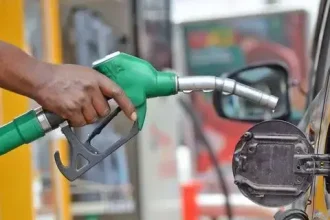
“With fuel prices above N1,000, the cost of moving goods from Lagos ports to Onitsha and other cities in the South-East became very high,” he said.
At Abakaliki International Market, traders said weak patronage had left some businesses without sufficient turnover. Joy Ezediora said customers lacked the money needed to patronise traders.
“There is no money, hunger and starvation everywhere. It is when the customers have money that they will come to market to patronise us,” she said.
Ekene Nwankwo said some traders were consuming their business capital to survive.
“There is no business. Some of us have been eating from capital,” he said, calling for government grants.
Building materials dealer Chukwudi Nweke similarly appealed for empowerment programmes to help traders recover their businesses.
At Relief Market in Owerri, traders identified declining sales and market charges as major concerns. Fabric seller Ifeanyi Osuji said his sales had fallen by about half.
“Our biggest challenge is low sales. I now sell about half of what I used to sell before this government came into power,” he said.
Bridget Nwankwo, another trader, said traders also faced an annual levy of N24,000 alongside other charges. She appealed for a reduction in the financial burden on traders.
At Eke Market in Nkanu West Local Government Area of Enugu State, traders said inadequate infrastructure was worsening their difficulties. Condiments seller Ezinne Nwobodo said poor drainage made the market difficult to access during rainfall.
“Every part of the market becomes marshy whenever it rains and it has made customers to consider other places where they buy condiments,” she said.
Cosmetics dealer Emeka Amadi called for expansion of the market, noting that it serves students, workers and residents in surrounding communities. The congestion has also resulted in traders displaying goods along major roads, contributing to traffic around the market.
Some traders in Onitsha also raised concerns about multiple taxation, shop rents, alleged harassment and disputes over business premises. Kenneth Okafor, a former market union leader and trader at Ozomagala Building Materials Market, called for government intervention over alleged harassment linked to shop lease disputes.
He alleged that some traders and market leaders had been arrested and taken outside Anambra State over disagreements concerning lease arrangements. Okafor said some traders had invested substantially in renovating or reconstructing facilities based on agreements with property owners but later encountered disputes over the terms.
He urged the Inspector-General of Police and the Anambra State Government to investigate the allegations and ensure that disputes were resolved according to the law. He also appealed for measures to prevent the disagreements from escalating into wider disturbances in the markets.
Across the South-East, traders are calling for interventions that address the rising cost of doing business, including improved infrastructure, affordable credit, grants and lower taxes and levies. They also want measures capable of restoring consumer purchasing power, arguing that businesses cannot recover without customers having enough disposable income to spend.