



Nigeria’s child justice system is facing renewed scrutiny as stakeholders push for stronger legal protection and representation for vulnerable children.
The concerns were highlighted following the launch of a N120 million partnership between the United Nations Children’s Fund (UNICEF) and the Nigerian Bar Association (NBA) to expand free legal services for children across the country. The initiative, unveiled on August 10, seeks to ensure that children who come into contact with the justice system are protected, represented and supported regardless of their economic circumstances.
UNICEF Country Representative, Wafaa Saeed, said the partnership was driven by the principle that no child should be denied justice because they cannot afford a lawyer.
She identified several challenges confronting children within Nigeria’s justice system, including detention without legal representation, lengthy case delays, limited diversion opportunities and weak referral mechanisms. According to her, access to justice should be treated not only as a legal concern but also as a child protection and human dignity issue.
She said UNICEF expected the NBA’s network of legal practitioners across 130 branches to help establish sustainable pathways for pro bono representation. The Justice for Children project is therefore designed to mobilise lawyers, strengthen referral systems and improve professional capacity in handling child-sensitive cases.
NBA President, Mazi Afam Osigwe, SAN, said the association was committed to ensuring that children whose rights had been violated could obtain effective legal representation. Osigwe noted that children affected by violence, abuse, exploitation, trafficking, neglect and other forms of vulnerability frequently struggle to obtain adequate legal assistance. He described lawyers as guardians of justice and defenders of vulnerable members of society.
The NBA president consequently urged branches, law firms and individual lawyers to dedicate professional time and resources to child-related cases. He also called on every NBA branch to establish or strengthen pro bono schemes focused specifically on children.
The Nigerian Correctional Service also drew attention to the shortage of specialised facilities for children in conflict with the law. An Assistant Controller-General of Corrections, Mr Debit Timothy, disclosed that Nigeria currently has only three borstal homes.
The facilities are located in Abeokuta, Kaduna and Ilorin and currently accommodate 1,205 children on remand. Timothy urged the NBA and Federal Ministry of Justice to advocate for additional borstal facilities across the country. He suggested establishing facilities in every state or, at minimum, one facility in each of Nigeria’s six geopolitical zones.
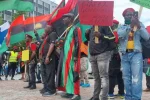
The renewed discussion on child justice also recalls the widely criticised arraignment of minors arrested during the #EndBadGovernance protests in 2024.
On November 1, 2024, 32 children aged between 13 and 17 were brought before the Federal High Court in Abuja after spending months in detention. Four reportedly collapsed during the proceedings and required medical attention. The Federal Government later withdrew the charges after public outrage intensified over the children’s condition.
The incident triggered condemnation from human rights stakeholders and renewed attention to the treatment of children within Nigeria’s criminal justice system. Human rights lawyer Femi Falana, SAN, subsequently provided pro bono representation for the affected minors.
Representing the Attorney-General of the Federation, the Director of Criminal Justice and Reforms Department, Mrs Leticia Ayoola-Daniels, said government remained committed to strengthening child justice.
She pointed to the Child Rights Act, 2003, which she said was undergoing legislative review to reflect contemporary realities. Stakeholders at the event described the UNICEF-NBA partnership as an important intervention capable of improving access to justice for vulnerable children.
NBA Young Lawyers Forum Secretary, Etaba Agbor, said the N120 million Justice for Children project could create a nationwide network of lawyers trained to handle child-related cases with greater competence and sensitivity. He said its successful implementation could leave a lasting impact on Nigeria’s justice system and the protection of children’s rights.