





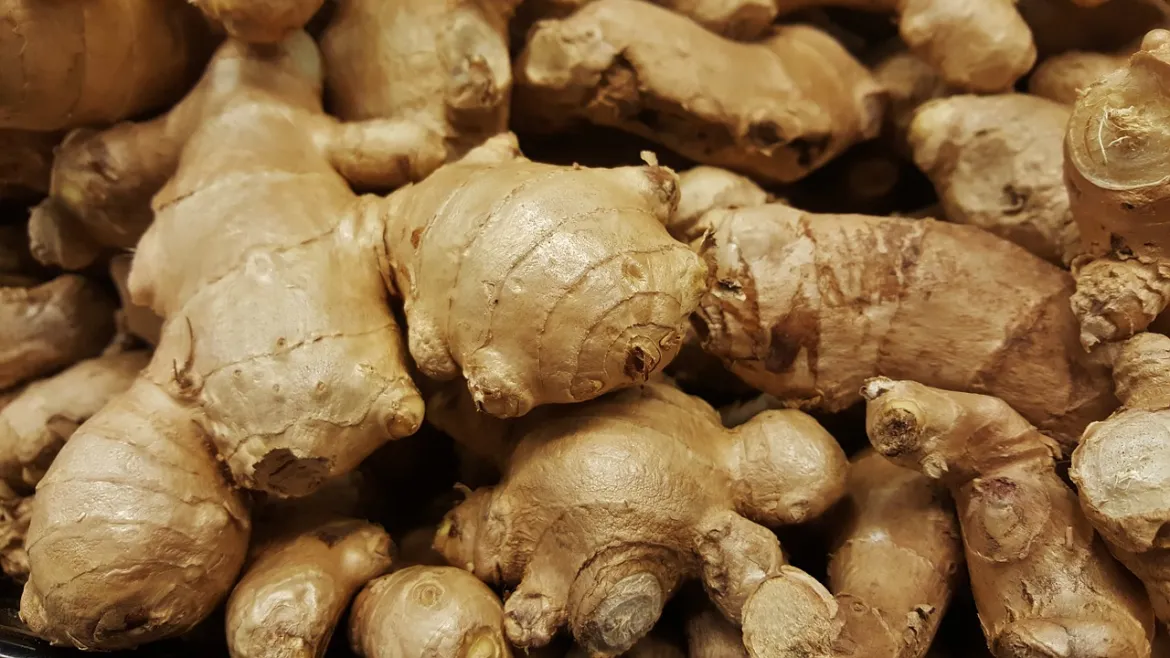
The National Agricultural Development Fund (NADF) and the National Root Crops Research Institute (NRCRI), Umudike, have unveiled a Ginger Value Chain Recovery and Sustainability Programme aimed at driving ginger industry recovery in Nigeria following a devastating blight epidemic. The initiative seeks to restore production, strengthen research capacity, and reposition the sector as a key contributor to agricultural exports and economic diversification under the Federal Government’s Renewed Hope Agenda.
Nigeria’s ginger sector suffered a major setback after a blight epidemic significantly reduced production across key growing states. The outbreak affected farmers’ livelihoods, export performance, and supply chains, exposing structural weaknesses in seed systems and disease management.
In response, government agencies and research institutions have been working to design coordinated interventions to restore productivity and prevent future outbreaks. The new programme represents one of the most structured national efforts yet to support ginger industry recovery and strengthen long-term sustainability.
The programme was launched at the NRCRI headquarters in Umudike, Abia State, bringing together government officials, researchers, commodity associations, development partners, and private sector stakeholders.
Speaking on behalf of the Executive Secretary and Chief Executive Officer of NADF, Mohammed Ibrahim, General Manager of Technical Services, Ernest Ihedigbo, described the initiative as a strategic step toward agricultural transformation and economic diversification.
He said the ginger industry recovery programme aligns with President Bola Tinubu’s Renewed Hope Agenda and NADF’s mandate as a catalytic financing institution supporting agricultural innovation and investment.
Ihedigbo said: “Agricultural transformation cannot be achieved without strong research institutions, modern technologies and strategic investments that connect scientific discoveries with production and markets.”
He explained that NADF is implementing two major interventions. The first focuses on strengthening selected agricultural research institutes as Centres of Excellence through investments in laboratories, biotechnology facilities, renewable energy systems, irrigation infrastructure, and digital platforms.
NRCRI has been selected as the South-East beneficiary and will receive support for energy systems, digital infrastructure, and laboratory equipment installation to enhance research capacity and innovation output. The second intervention directly targets ginger industry recovery, designed to rebuild production systems after the 2023 blight outbreak that disrupted output, reduced export earnings, and exposed vulnerabilities in the value chain.
Under the programme, NADF will provide six metric tonnes of ginger rhizomes alongside infrastructure for germplasm conservation, disease-free seed multiplication, tissue culture propagation, and adaptive field preservation to ensure sustainable seed systems.
According to Ihedigbo, NADF previously supported farmers through the Ginger Recovery Advancement and Transformation for Economic Empowerment (GRATE) Programme, which reached about 6,000 farmers across Kaduna, Plateau, and the Federal Capital Territory with improved seeds, inputs, and pest management support.
The ginger industry recovery programme is expected to restore productivity in affected regions while strengthening Nigeria’s position in the global ginger market, which is projected to exceed three billion dollars in the coming years. Stakeholders say improved research infrastructure and disease-free seed systems will enhance resilience, boost farmer confidence, and expand export opportunities.
Representatives from the Nigerian Export Promotion Council (NEPC) noted that ginger remains a priority non-oil export commodity, while industry leaders warned that Nigeria risks losing global competitiveness without sustained investment in production and research.
Stakeholders at the launch urged continued collaboration between government institutions, researchers, and industry players to sustain the momentum of the ginger industry recovery programme. NADF and NRCRI said the intervention will focus on strengthening research capacity, rebuilding production systems, and ensuring long-term sustainability of the ginger value chain in Nigeria.