






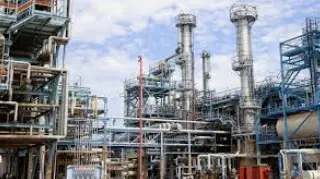
The Nigerian National Petroleum Company Limited (NNPC Ltd) has signed a Memorandum of Understanding with Chinese firms to support the rehabilitation, operation, and potential expansion of the Warri Port Harcourt refineries under a structured partnership arrangement. The agreement is aimed at improving refinery performance and strengthening Nigeria’s domestic refining capacity.
Nigeria’s refining infrastructure has faced years of underperformance, leading to repeated government-led rehabilitation efforts. The Warri Refining and Petrochemical Company and the Port Harcourt Refining Company remain key national assets intended to reduce reliance on imported petroleum products.
In response to persistent operational challenges, NNPC Ltd has increasingly adopted partnership-based models involving external technical expertise. The engagement with Chinese firms reflects this broader strategy to combine local ownership with international operational support for refinery rehabilitation and management.
NNPC Ltd confirmed that the Memorandum of Understanding was signed with Sanjiang Chemical Company Limited and Xingcheng (Fuzhou) Industrial Park Operation and Management Co. Ltd, both identified as Chinese firms involved in industrial and energy operations.
The agreement was signed in Jiaxing City, China, on April 30, 2026.
According to NNPC’s Chief Corporate Communications Officer, Andy Odey, the arrangement forms part of a broader framework designed to complete ongoing rehabilitation works and improve operational efficiency across the Warri Port Harcourt refineries.
The Group Chief Executive Officer of NNPC Ltd, Bashir Bayo Ojulari, participated in the signing alongside representatives of the Chinese firms, including Guan Jianzhong and Bill Bi.
The partnership is expected to support operational readiness, technical maintenance systems, and long-term sustainability planning for the refineries once rehabilitation is completed. NNPC noted that the involvement of Chinese firms is intended to strengthen technical capacity and operational reliability.
The engagement with Chinese firms signals continued reliance on international technical partnerships in Nigeria’s downstream petroleum sector. If fully implemented, the arrangement could contribute to improved refinery output and reduced dependence on imported refined fuel.
It also highlights a policy direction focused on blended operational models, where foreign technical partners support state-owned infrastructure without transferring ownership. This approach may influence future refinery rehabilitation projects and broader energy sector reforms.
The eventual impact will depend on regulatory approvals, investment structure, and execution timelines agreed under the framework involving the Chinese firms.