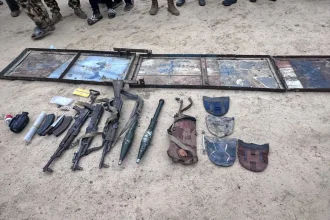





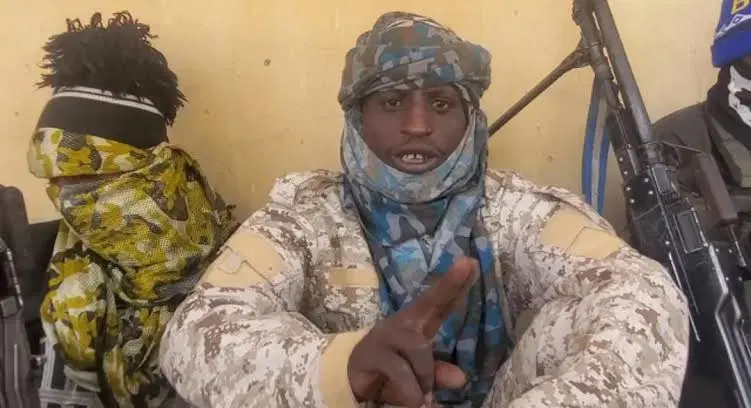
Reports alleging that notorious bandit leader Bello Turji has acquired sophisticated weapons and is collaborating with Boko Haram elements to train fighters have renewed concerns about the evolving security landscape in northern Nigeria. While the claims remain unverified, security analysts say the allegations underscore growing fears about the increasing sophistication of armed groups operating across the North-West and parts of the wider Sahel region.
Nigeria has continued to confront security challenges linked to banditry, terrorism, kidnapping, cattle rustling, and illegal mining activities. In recent years, security agencies have intensified operations against armed groups across Zamfara, Katsina, Sokoto, Kaduna, Niger, and Kebbi states.
Despite these efforts, concerns persist regarding the ability of criminal networks to access weapons, recruit fighters, and maintain operations in difficult terrains. The latest allegations involving Bello Turji weapons have reignited discussions about the sources of arms and the resilience of armed groups despite ongoing military campaigns.
The concerns emerged shortly after former National Youth Service Corps Director-General, Brigadier-General Maharazu Tsiga (rtd), suggested that bandits and terrorists could be receiving support from within certain official circles. Although no evidence has been publicly presented to substantiate the allegations, security experts argue that the claims reflect widespread public concern over the continued expansion of armed groups.
According to Halliru Abdullahi Maraya, a former Special Adviser to the Kaduna State Governor on Islamic Matters and Pilgrimage, illicit arms trafficking remains one of the major drivers of insecurity. He linked the availability of sophisticated weapons to transnational smuggling routes, corruption, and attacks on security formations where arms and ammunition are sometimes stolen by criminal groups.
Analysts note that concerns surrounding Bello Turji weapons are consistent with long-standing warnings about Nigeria’s porous borders, which have been identified as channels for the movement of illicit arms from conflict zones in Libya, Mali, Burkina Faso, and other parts of the Sahel. Reports also suggest that criminal networks conceal weapons in fuel tanks, cargo vehicles, and agricultural shipments to evade detection.
Security experts further point to repeated attacks on military and police formations as another source of arms acquisition for armed groups. During such incidents, weapons, ammunition, and communication equipment are sometimes carted away by attackers.
Former Chief of Army Staff, Lt.-Gen. Tukur Buratai (rtd), has also warned that terrorist and bandit groups are becoming increasingly sophisticated, using digital platforms and modern communication tools to coordinate activities and evade detection. He questioned why groups that openly release videos and communicate online remain difficult to track despite available technological capabilities.
Security analysts say the allegations surrounding Bello Turji weapons highlight the need for stronger border management, improved intelligence gathering, and greater accountability within security institutions. They also argue that the convergence of banditry, terrorism, kidnapping, illegal mining, and extortion has created a criminal economy capable of sustaining recruitment and arms procurement across multiple regions.
While the claims regarding Bello Turji weapons have not been independently verified, experts say they reinforce concerns about the changing nature of security threats in Nigeria. They maintain that sustained military operations, intelligence-driven interventions, community cooperation, and stronger border controls will remain critical to addressing the country’s evolving security challenges.