


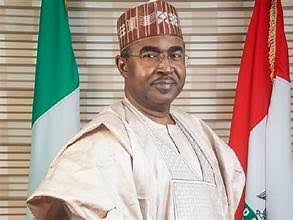
For many Nigerians, Mohammed Buba Marwa is remembered through two very different legacies: his years as Lagos military administrator and the tricycles popularly known as “Keke Marwa.”
But long before the name became attached to a familiar means of transportation, Marwa had built a career spanning the Nigerian Army, military administration, diplomacy and public service.
Brigadier-General Mohammed Buba Marwa (rtd.) turned 73 on Wednesday, September 9, 2026, marking more than five decades of service in Nigeria’s military and public life.
Born on September 9, 1953, in Kaduna, Marwa grew up in a military family and eventually followed the same path. He attended the Nigerian Military School and the Nigerian Defence Academy before being commissioned into the Nigerian Army in 1973.
His military career included several senior appointments. He served as Aide-de-Camp to former Chief of Army Staff, Lieutenant-General Theophilus Danjuma, and later became Academic Registrar of the Nigerian Defence Academy.
Before becoming a household name in Lagos, Marwa served as military governor of the old Borno State between 1990 and 1992. He subsequently held diplomatic positions before returning to state administration.
In August 1996, during Nigeria’s military era, he was appointed Military Administrator of Lagos State. He remained in the position until 1999.
Those three years became the most defining period of his public career. But his tenure was also marked by a dramatic security incident.
On December 16, 1996, a bomb exploded along his route to work. The blast narrowly missed him and became one of the most memorable moments of his time in office.
Marwa later recalled that he normally left his Isaac John residence for work at about 8am and followed the same route, believing there was no immediate threat.
Despite the attack, he continued with his administration and pursued an aggressive approach to some of Lagos’ security and infrastructure challenges.
Among the initiatives associated with his administration was “Operation Sweep,” a security operation introduced to tackle crime across the state.
His government also launched “Operation 250 Roads,” an infrastructure programme focused on improving roads. Other areas of attention included public health, housing and urban development.
Yet one initiative from the Marwa era would outlive many of the projects.
That was the introduction of tricycles as an alternative means of transportation for Lagos residents.
The tricycles eventually became popularly known as “Keke Marwa,” linking the transport system to the administrator who introduced them. The expression survived long after Marwa left office and became part of everyday Nigerian vocabulary.
Marwa left the Lagos government in 1999 but remained active in public service.
More than two decades later, he returned to national prominence when he was appointed Chairman of the National Drug Law Enforcement Agency in 2021.
At the NDLEA, he took charge of Nigeria’s efforts against drug trafficking and substance abuse, bringing an enforcement-focused approach similar to the style associated with his Lagos years.
His career has therefore crossed several areas of national service, from military command and state administration to diplomacy and the fight against illicit drugs.
At 73, Marwa’s name continues to evoke different memories among Nigerians. For some, he is the military administrator associated with visible changes in Lagos. For others, he is inseparable from the tricycles that still bear his nickname.
But behind the “Keke Marwa” identity is a career that stretches from the Nigerian Army to the highest levels of public administration.
His story includes military service, governance, diplomacy, a near-fatal bomb attack and a later national role in Nigeria’s fight against drugs, making Mohammed Buba Marwa one of the country’s more distinctive public servants.