



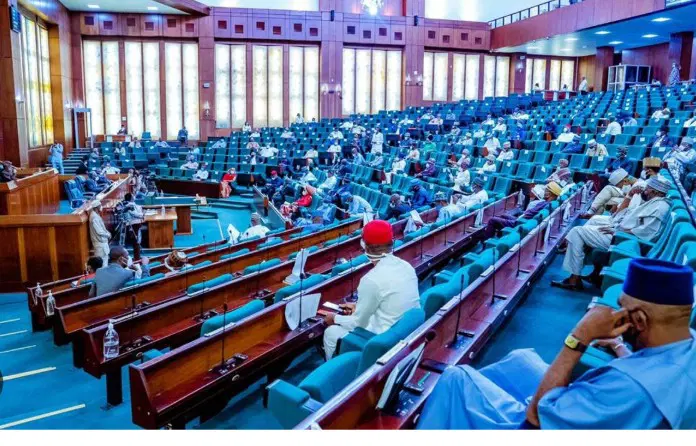
The House of Representatives Ad-hoc Committee probing the alleged establishment of the Presidential Foreign Investment Promotion Council (PFIPC) without legal backing has summoned the National Security Adviser (NSA) and the Minister of Foreign Affairs to explain how the controversial body allegedly continued operating despite warnings over its legitimacy.
The committee’s decision marks another major development in the ongoing PFIPC investigation, with lawmakers seeking answers over the actions taken after government agencies reportedly established that the council had no legal recognition.
Appearing before the committee, the Permanent Secretary of the Ministry of Foreign Affairs, Mr. Dunoma Umar Ahmed, presented a memorandum dated July 21, 2026, explaining that the ministry never recognised or collaborated with the alleged council.
According to Ahmed, Prince Adeniyi Matthew Adeyemi, who introduced himself as Director-General of the Presidential Economic Advisory Council/Presidential Foreign Investment Promotion Council (PEAC/PFIPC), approached the ministry on three separate occasions requesting endorsement and collaboration for a proposed World Investment Summit in Nigeria.
The ministry received the requests on June 26, 2025, August 5, 2025, and June 5, 2026, but declined to act on them after identifying irregularities in the correspondence.
Ahmed explained that officials carried out due diligence before refusing the requests because of inconsistencies in the documents and concerns surrounding the legitimacy of both the council and its promoter. The ministry also disclosed that it formally sought clarification from the Office of the National Security Adviser on October 16, 2025 regarding Prince Adeyemi’s status.
According to the Permanent Secretary, the NSA replied on November 26, 2025, stating that enquiries made with both the Office of the Secretary to the Government of the Federation and the Office of the Chief of Staff to the President confirmed that Prince Matthew Adeyemi was unknown to any office of the Federal Government.
Ahmed further told lawmakers that the Ministry of Foreign Affairs never participated in any diplomatic activities organised by PFIPC and maintained no official relationship with either the council or its alleged Director-General.
Committee members questioned why stronger action was not taken after the ministry received confirmation that the organisation lacked legal recognition. One member of the panel, Abubakar Hassan Fulata, asked whether the ministry informed Prince Adeyemi that the organisation was illegal after receiving the NSA’s response.
The committee chairman defended the ministry’s decision to refer the matter to the National Security Adviser but insisted that the security office must now explain what actions followed its discovery that the council was not recognised by the Federal Government.
According to the chairman, the Office of the National Security Adviser should account for why the alleged council was still able to operate and engage in activities involving foreign nationals after confirming its questionable status.
Lawmakers also questioned how the alleged council reportedly conducted diplomatic engagements despite the Ministry of Foreign Affairs distancing itself from its activities. The committee described the situation as evidence of weak coordination among government institutions, arguing that an organisation allegedly lacking legal backing should not have been able to function at such a level.
Members expressed concern that an individual could allegedly establish a fake government agency, obtain official documents and conduct engagements involving foreign interests without prompt intervention from relevant authorities.
Responding to the concerns, Ahmed acknowledged that some organisations sometimes communicate directly with foreign missions without following established diplomatic procedures. He said the ministry regularly issues circulars reminding organisations to comply with official communication channels.
The committee also issued a final warning to Ministries, Departments and Agencies linked to the PFIPC investigation, expressing disappointment that several invited institutions failed to appear before the panel. Committee Chairman Yusuf Gagdi described the absence of the agencies as a disregard for the constitutional oversight powers of the House of Representatives.
He stressed that invitations issued by parliamentary committees are backed by Sections 88 and 89 of the 1999 Constitution and therefore carry legal obligations. Gagdi directed the chief executives and accounting officers of all defaulting agencies to appear personally before the committee on Thursday, July 23, 2026, with all requested documents.
He emphasised that the committee would not accept representatives or permanent secretaries, insisting that only the accounting officers of the affected agencies would be allowed to testify. The chairman warned that agencies failing to honour the final invitation without lawful justification could face constitutional and statutory sanctions.
He maintained that the investigation is intended to establish the facts, strengthen accountability and uphold constitutional governance rather than target any individual or institution. During the hearing, the committee also rejected the representative sent by the Ministry of Finance after ruling that only the ministry’s accounting officer could appear before the panel.
The hearing was subsequently adjourned until Thursday, July 23, 2026, when the committee expects all defaulting agencies and invited officials, including the National Security Adviser and the Minister of Foreign Affairs, to appear with relevant documents as the investigation continues.