






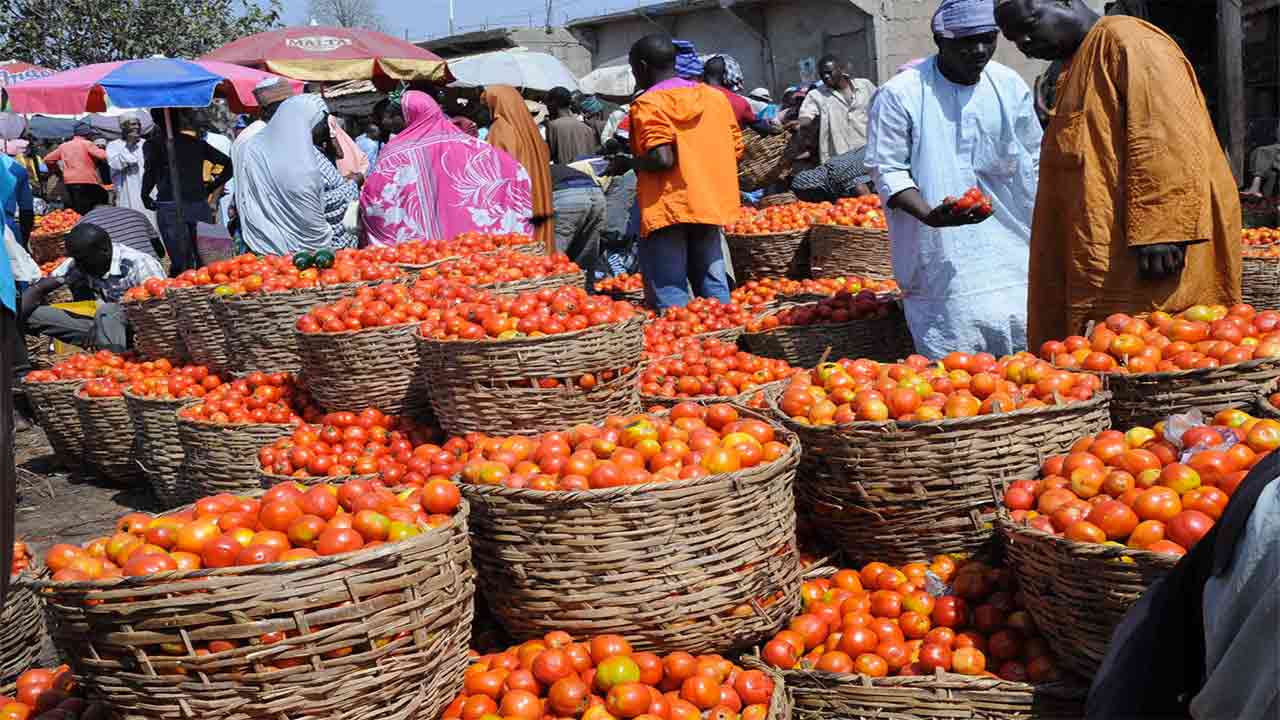
The sharp rise in Tomato prices Nigeria has left households, caterers and food vendors struggling with higher meal preparation costs, while farmers blame insecurity, climate challenges and the collapse of industrial tomato processing for the worsening supply situation. According to the National Bureau of Statistics (NBS), Nigeria’s food inflation rate increased to 16.96 per cent in May 2026, up from 16.68 per cent in April, with tomatoes remaining one of the major contributors to rising food costs.
Although Nigeria is Africa’s second-largest tomato producer after Egypt, producing between 1.8 million and 2.3 million metric tonnes annually, industry stakeholders say persistent supply chain challenges continue to fuel price instability. Farmers argue that the shutdown or reduced operations of major tomato processing companies has weakened demand certainty, discouraged production and increased market volatility across the value chain.
A market survey conducted at Mile 12 International Market, Lagos, showed that Tomato prices Nigeria more than doubled within three weeks. A large basket of Jos tomatoes, previously sold for between N60,000 and N70,000 in May, now sells for between N120,000 and N150,000. A crate of tomatoes has also increased from about N25,000 to N70,000.
Retailers noted that cheaper tomato varieties from the South-West have become more common in the market. However, many consumers complained that these varieties contain more water and produce less tomato paste compared to northern-grown tomatoes. Foodstuff trader Madam Jerome said tomatoes have become a necessity rather than a preferred purchase.
“I bought a basket equivalent to three paint containers for N40,000. Many people prefer this type because of its plumpness and colour. Tomatoes are gold in the market now.”
She also recounted purchasing a basket of Jos tomatoes for N120,000, only to discover that several tomatoes underneath were unripe and partly spoiled. Tomato trader Ibrahim Aminu linked the rising prices to poor farming conditions in northern Nigeria.
“Arewa are not farming well due to rainfall and drought on the farm.”
Many households say the soaring prices have forced them to alter their cooking habits. Mrs Susan explained that tomatoes have almost disappeared from her weekly meals.
“Usually, I buy a paint of tomatoes for N3,500, but recently I got a paint for N15,000. We now use vegetables, carrot and cabbage sauce and even palm kernel stew.”
Another consumer, Mrs Ebele, said a paint bucket that previously cost N4,000 now sells for N10,000, forcing her to purchase smaller quantities and supplement meals with vegetables. Caterers have also reported significant financial losses. Mrs Princess said she underestimated the speed of the price increase before catering for an event.
“I regretted collecting full payment before the event. I lost so much money and even settled workers from my pocket.”
Another caterer, Juliet, said many operators now combine fresh tomatoes with tomato paste to reduce production costs.
The price pressure extends beyond tomatoes. Pepper trader Murtala said adverse weather conditions in northern Nigeria have pushed pepper prices significantly higher. Medium-sized bowls of pepper and shombo now sell for about N30,000, while tatashi costs as much as N40,000. Ginger trader Mustapha disclosed that a sack of ginger now costs approximately N700,000, compared to around N200,000 previously.
National Secretary of the National Tomato Growers, Processors and Marketers Association of Nigeria (NATPAN), Sani Danladi-Yadakwari, described the current situation as a seasonal supply shortage made worse by insecurity and reduced industrial demand.
He revealed that only two major tomato-processing companies are currently purchasing from farmers, while companies including Dangote Tomato Processing Company, GBFoods and Savannah Integrated Farm have either reduced operations or stopped buying fresh tomatoes. According to him, the absence of reliable off-takers discourages farmers from investing heavily in production.
Danladi-Yadakwari also identified insecurity, climate change, rising production costs and attacks by the Tuta absoluta pest as major challenges affecting tomato production. He expressed optimism that Tomato prices Nigeria could begin easing from August, when rainy-season harvests are expected to reach markets.
NATPAN urged governments and agricultural stakeholders to expand greenhouse farming and invest in solar-powered irrigation systems to lower production costs and support year-round cultivation. According to the association, reducing farmers’ dependence on fuel-powered irrigation would encourage increased production, strengthen supply and help stabilise tomato prices over the long term.