





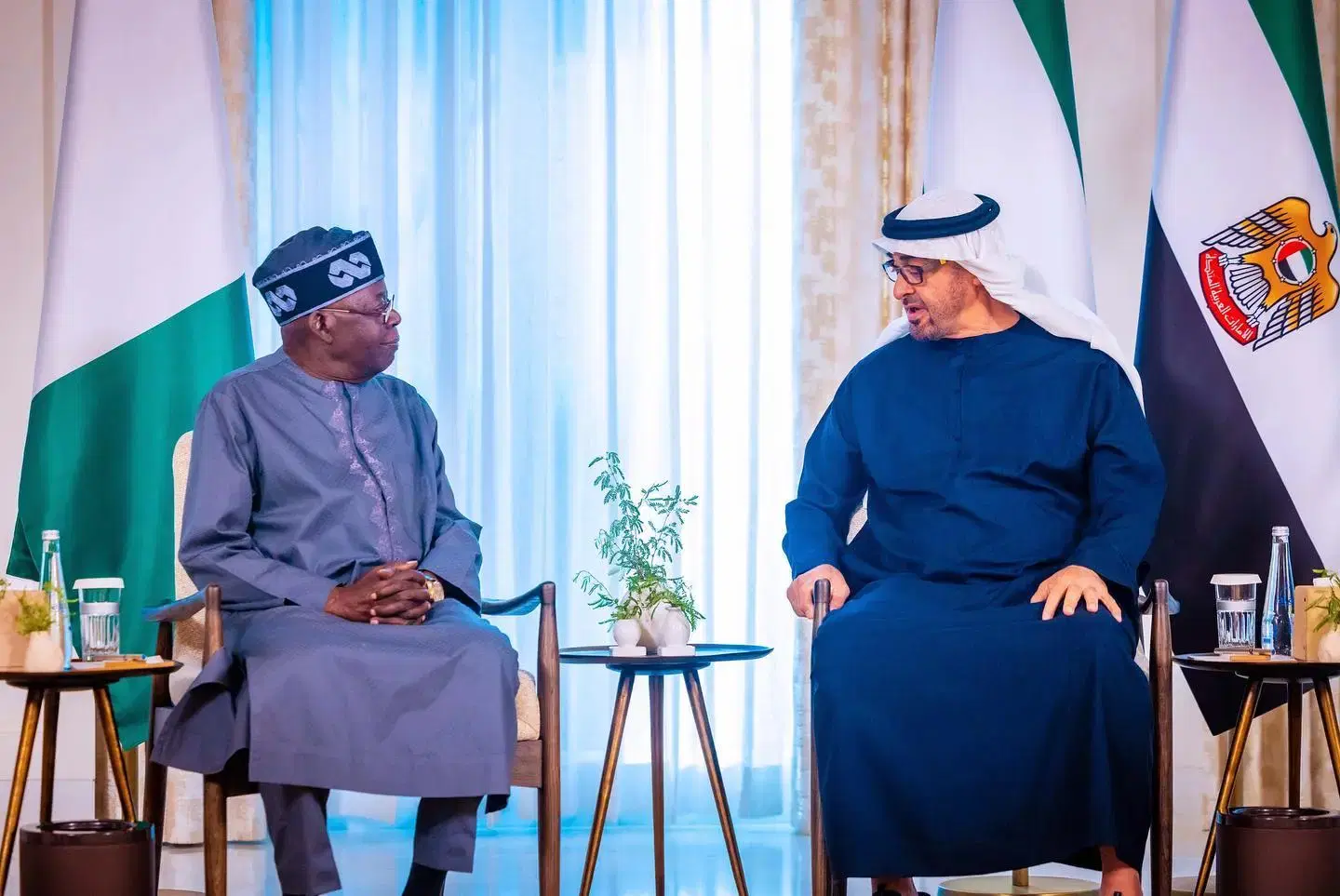
Nigeria UAE trade reached $5 billion in non-oil transactions in 2025, according to the United Arab Emirates Ambassador to Nigeria, Salem Saeed Al-Shamsi, highlighting growing commercial relations between both countries. The envoy disclosed the figure while outlining new investment initiatives, including the planned commencement of operations by First Abu Dhabi Bank in Lagos. The latest Nigeria UAE trade performance reflects increasing cooperation across finance, technology, infrastructure, agriculture, logistics, and other non-oil sectors.
Economic relations between Nigeria and the United Arab Emirates have expanded significantly in recent years as both countries seek to strengthen trade and investment beyond traditional oil-based exchanges. The UAE has become one of Nigeria’s major economic partners in the Middle East, with growing interest from investors in sectors linked to economic diversification and infrastructure development.
The development comes amid broader efforts by the Federal Government to attract foreign direct investment and increase non-oil exports. Nigerian authorities have repeatedly emphasized the need to reduce dependence on crude oil revenues while expanding commercial partnerships capable of supporting industrial growth and job creation. Recent engagements between government officials, business groups, and investors from both countries have also contributed to stronger economic cooperation and increased private sector participation.
Speaking during a business engagement in Lagos, Ambassador Al-Shamsi stated that Nigeria UAE trade in non-oil goods and services rose to approximately $5 billion in 2025, compared to about $4.3 billion recorded in 2024. He described the increase as evidence of strengthening commercial ties and growing investor confidence between both countries.
The ambassador disclosed that First Abu Dhabi Bank, the largest bank in the United Arab Emirates, is set to commence operations in Lagos. According to him, the move is expected to strengthen financial connectivity between businesses in Nigeria and the UAE while supporting trade and investment activities.
Al-Shamsi noted that the UAE continues to view Nigeria as a strategic economic partner in Africa due to its population size, entrepreneurial capacity, and market potential. He stated that businesses from the UAE are increasingly exploring opportunities in agriculture, renewable energy, logistics, technology, manufacturing, and financial services.
The envoy also highlighted ongoing discussions involving public and private sector stakeholders aimed at expanding bilateral cooperation and improving the ease of doing business. He said stronger institutional partnerships have contributed to rising commercial engagement between companies operating in both countries.
The growth in Nigeria UAE trade could support Nigeria’s economic diversification objectives by attracting investment into sectors outside crude oil production. Increased financial sector participation through institutions such as First Abu Dhabi Bank may also improve access to capital, facilitate cross-border transactions, and strengthen investment flows between both economies.
Analysts note that expanding trade relations with Gulf economies could provide additional opportunities for Nigerian exporters, technology firms, manufacturers, and agribusiness operators seeking access to international markets. The development also reflects broader efforts to deepen economic engagement between African and Middle Eastern economies through investment-led partnerships.