



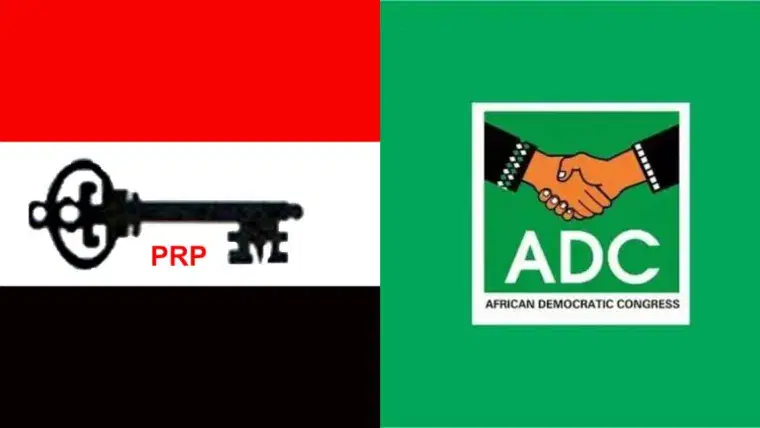
The ADC PRP clash has escalated ahead of the 2027 general elections as both parties trade accusations over internal crises, alleged political interference, and the shrinking space for opposition politics in Nigeria. The dispute, which involves leadership struggles, court cases, and public statements, reflects growing tensions within opposition blocs preparing for the polls. The ADC PRP clash has also raised concerns about its potential impact on party participation and democratic stability.
The African Democratic Congress (ADC) has been embroiled in leadership disputes that have reached the Supreme Court, with competing factions seeking recognition by the Independent National Electoral Commission (INEC). The party has warned that delays in judicial resolution could affect its ability to participate in the 2027 elections.
At the same time, the Peoples Redemption Party (PRP) has faced reports of internal disagreement, which the party strongly denies. PRP leadership maintains that claims of factionalisation are false and describes recent allegations as politically motivated attempts to destabilise the party. Both parties are part of broader opposition realignments and coalition discussions ahead of 2027, making their internal stability a key factor in national political calculations.
In a letter to the Chief Justice of Nigeria, ADC leadership urged expedited judgment in its leadership dispute, warning that delays could result in exclusion from the 2027 elections. The party argued that its participation is dependent on timely judicial resolution of its internal crisis.
The ADC also alleged that instability in opposition parties, including the PRP, reflects a broader pattern of political interference aimed at weakening opposition platforms. Its spokesperson said the emergence of factional claims within PRP followed political speculation about coalition discussions.
The PRP, however, rejected these claims, stating that there is no faction within the party and describing alleged groups such as the “PRP-Vanguard Collective” as non-existent. The party insisted that its leadership remains intact and functional. PRP leadership further stated that it would not be intimidated by what it described as misinformation or propaganda, adding that it remains prepared for both “genuine and manufactured aggression.”
Meanwhile, senior lawyers have weighed in on the ADC legal dispute, cautioning against interpreting judicial delays as political interference. They noted that the Supreme Court is managing a heavy caseload and must ensure due process in its rulings.
The ongoing ADC PRP clash highlights increasing tension within Nigeria’s opposition landscape ahead of the 2027 elections. Legal disputes, leadership disagreements, and public accusations risk affecting party organisation and voter confidence.
The situation also raises concerns about electoral readiness, particularly where court cases intersect with INEC deadlines. Analysts warn that prolonged uncertainty could affect party participation and political stability within opposition coalitions.