



Israel’s Ambassador to Nigeria, Michael Freeman, has alleged that the Iranian government is sponsoring extremist groups in Nigeria, while the Iranian Embassy in Abuja has rejected the claims as “unfounded” and part of a broader propaganda campaign.
The accusations and rebuttals come amid heightened military tensions involving the United States, Israel and Iran in the Middle East.
Diplomatic activity in Abuja has reflected the broader geopolitical context of these hostilities, with representatives of foreign missions making public statements on related security issues.
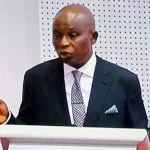
In a February 6, 2026 interview on Arise TV, Ambassador Freeman said Iran supports certain Islamic movements in Nigeria as part of what he described as a global campaign to spread terrorism.
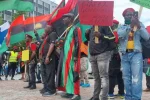
He specifically cited the Islamic Movement of Nigeria (IMN), also known as the Shi’ite movement, as one example of a group receiving backing from Tehran.
According to Freeman, the Iranian government’s alleged sponsorship extends beyond Nigeria, with Iran purportedly providing support to other organisations cited in global security concerns. He characterised Tehran’s policies as hostile toward Israel and its allies.
The Iranian Embassy in Abuja responded to these allegations, issuing a statement dismissing the claims as lacking credible basis and describing them as part of a propaganda effort.
The embassy emphasised that relations between Iran and Nigeria remain friendly, transparent and grounded in international law, with cooperation spanning multiple sectors.
The statement said cooperation includes areas such as trade, education, culture, health, and scientific engagement.
Iran’s diplomatic mission also reiterated its commitment to constructive, long‑term engagement with Nigeria and other African countries and stated that lasting peace and stability are achieved through dialogue, respect for national sovereignty and adherence to international law.
The contrasting statements from the Israeli and Iranian diplomatic missions highlight differing narratives presented by foreign governments regarding Iran’s role in international security issues, including alleged influence beyond the Middle East.
Such public diplomatic exchanges occur against the backdrop of broader geopolitical tensions that have drawn attention in Nigeria and globally.