


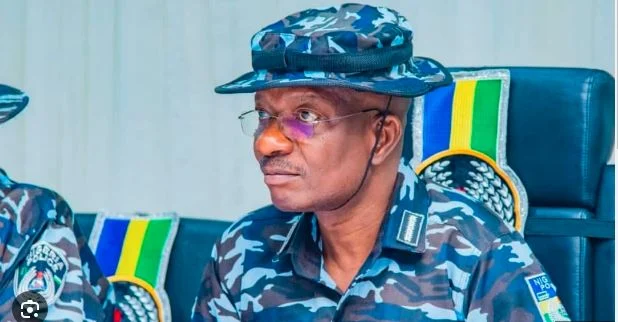
President Bola Tinubu has accepted the resignation of Inspector‑General of Police Kayode Egbetokun following reported differences between the president and the former police chief over implementation of a presidential directive, stance on state police and interpersonal conduct toward colleagues.
Kayode Egbetokun was appointed the 22nd Inspector‑General of Police on June 19, 2023, by President Tinubu and confirmed by the Nigeria Police Council in October 2023 under the amended Police Act, which extended the IGP’s fixed four‑year tenure regardless of age.
This placed his expected term up to October 2027.
On February 24, 2026, Egbetokun submitted his resignation letter, officially citing “family issues” as his reason for stepping down.
The Presidency later clarified that he resigned and was not formally “sacked.” His resignation occurred amid leadership changes within the Nigeria Police Force.)
Following his resignation, Assistant Inspector‑General of Police Tunji Disu was appointed Acting Inspector‑General of Police.
The Nigeria Police Council is expected to meet to consider his substantive confirmation before the Senate, as required under the Police Act.
Sources familiar with events indicated that one of the main issues between President Tinubu and Egbetokun centred on a presidential directive issued in November 2025.
The directive ordered the withdrawal of more than 11,000 police officers from Very Important Person protection duties so they could be redeployed to frontline security challenges such as kidnapping, terrorism and banditry.
Egbetokun reportedly delayed or resisted full implementation of this directive and expressed opposition during a security meeting, arguing that business leaders and senior corporate executives needed continued police protection.
Presidency sources said President Tinubu emphasised that responsibilities for VIP protection could be supported by the Nigeria Security and Civil Defence Corps, noting that civil defence officers are armed and trained as well.
The president affirmed that protection was still important but did not require police resources exclusively.
Another reported point of disagreement stemmed from Egbetokun’s opposition to the creation of state police, a security reform strongly supported by President Tinubu and currently subject to constitutional amendment processes in the National Assembly.
Egbetokun allegedly presented a memorandum against state policing at a public hearing, which was perceived by some administration officials as contrary to the president’s policy direction.
A third reported concern cited internal conduct toward colleagues, particularly regarding interactions with Tunji Disu, who subsequently became acting IGP.
Sources described instances in which Egbetokun’s conduct toward fellow senior police officers was seen as problematic by presidential aides.
The transition in the leadership of the Nigeria Police Force brings Acting IGP Tunji Disu to the top post under President Tinubu’s administration.
A forthcoming Police Council meeting is expected to address his confirmation as the substantive Inspector‑General of Police in line with statutory procedures.
The events surrounding Egbetokun’s resignation highlight tensions over policy implementation within Nigeria’s security architecture, including the role of the police in VIP protection duties and the broader reform agenda on state policing.
Decisions on these matters remain within ongoing administrative and legislative processes.