





Nigeria is intensifying efforts to expand cassava derivative exports as stakeholders in the agricultural and manufacturing sectors project that the country could generate up to $1 billion annually through industrial processing and value-added cassava products. The initiative reflects growing attention on export diversification and agro-industrial development beyond traditional garri production.
Nigeria remains the world’s largest producer of cassava, with millions of tonnes harvested annually across states including Benue, Kogi, Ogun, Delta, Ondo, and Cross River. Despite this production strength, a large percentage of cassava output is still consumed locally in basic forms such as garri, fufu, and starch for domestic use.
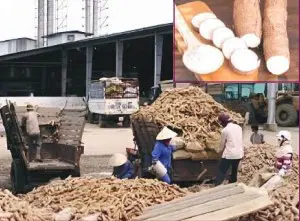
Over the years, agricultural experts and policymakers have repeatedly argued that the country has not fully maximised the economic potential of cassava processing and international trade. Stakeholders have identified industrial derivatives such as ethanol, sorbitol, cassava flour, starch, sweeteners, adhesives, and pharmaceutical-grade products as major opportunities for export growth.
The renewed push aligns with Nigeria’s broader strategy of diversifying foreign exchange earnings away from crude oil dependence.
Industry stakeholders stated that increasing cassava derivative exports would require significant investment in processing infrastructure, storage systems, logistics, and industrial-scale farming. According to agricultural experts cited in the report, Nigeria possesses the raw material base needed to compete in global cassava markets but continues to face challenges linked to low processing capacity and weak export infrastructure.
The report highlighted that countries such as Thailand and Vietnam have established strong international cassava export industries through industrial processing and coordinated value-chain development, despite producing less cassava than Nigeria in some periods.
Stakeholders noted that Nigeria’s cassava industry still relies heavily on subsistence-level production, limiting the country’s ability to meet industrial export demand consistently.
They further emphasized that expanding cassava derivative exports could stimulate rural industrialisation, create employment opportunities, increase foreign exchange earnings, and strengthen Nigeria’s agro-processing sector. Experts also identified policy consistency, access to financing, stable electricity supply, and transportation infrastructure as critical factors required to improve competitiveness in international cassava markets.
According to projections discussed by stakeholders, the country could generate up to $1 billion annually if industrial processing capacity and export coordination are strengthened effectively. The discussions around cassava derivative exports also included calls for improved collaboration between farmers, processors, exporters, financial institutions, and government agencies.
The push for increased cassava derivative exports reflects growing national interest in non-oil revenue generation and agricultural industrialisation.
If successfully implemented, the strategy could improve export earnings, deepen value addition in agriculture, and reduce post-harvest losses across cassava-producing regions. The development may also strengthen Nigeria’s manufacturing sector by increasing local supply of industrial raw materials used in food production, pharmaceuticals, textiles, and biofuel industries.