





Stakeholders have called for increased investment in women and girls’ nutrition, education and economic empowerment as part of efforts to tackle malnutrition and improve development outcomes.
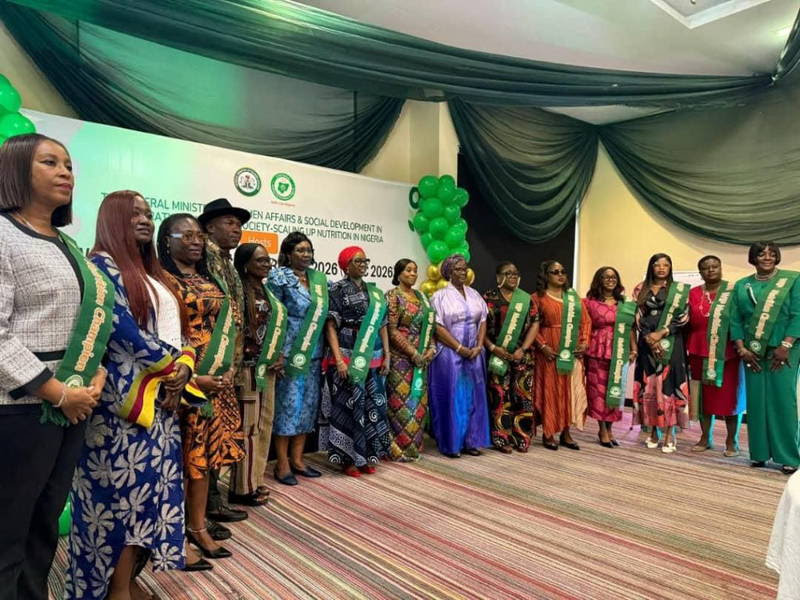
The call was made at the 2026 Women in Power Conference, WIPC, organised by the Federal Ministry of Women Affairs and Social Development in collaboration with Civil Society Scaling-Up Nutrition in Nigeria, CS-SUNN, in Lagos.
The conference, themed “Championing Women and Girls Nutrition for Sustainable Development,” brought together stakeholders to discuss ways of improving nutrition among women and girls.
Presenting an overview of the nutrition situation in Lagos State, the Secretary of the State Committee on Food and Nutrition, SCFN, Mrs Taiwo Fadairo, described malnutrition as a major public health concern affecting children, women, adults and other vulnerable groups.
She identified undernutrition, overnutrition and micronutrient deficiencies as major forms of malnutrition, urging Nigerians to pay greater attention to their food choices.
“We should eat our food as if we are taking our medicine. We should not eat anyhow,” Fadairo said.
She disclosed that anaemia among women of reproductive age in Lagos was close to 50 per cent, while early initiation of breastfeeding within the first hour of birth remained low at about 14 per cent.
According to her, the state was training health workers on maternal, infant and young child nutrition, with particular attention to colostrum and early breastfeeding.
Fadairo added that exclusive breastfeeding in Lagos stood at about 57.4 per cent, above the global target of 50 per cent, but said more needed to be done to improve complementary feeding and children’s access to a Minimum Acceptable Diet.
She stressed that nutrition interventions should cover all stages of life, particularly the first 1,000 days from conception to a child’s second birthday.
In her keynote address, wife of the Lagos State Governor, Dr Claudiana Ibijoke Sanwo-Olu, represented by the wife of the Deputy Governor, Mrs Oluremi Hamzat, described nutrition as essential to healthy living, human capital development and societal prosperity.
She said women and mothers had important roles in promoting healthy diets, breastfeeding and healthier lifestyles within families and communities.
Sanwo-Olu urged Nutrition Champions inaugurated at the conference to take the message into homes and communities rather than limiting advocacy to the event.
The Programme Officer of CS-SUNN, Hope Ikani, called for stronger investment in women and girls, arguing that education and economic empowerment were essential to improving nutrition outcomes.
“There is no country that can afford to leave half of its people behind,” Ikani said.
She noted that women and girls have specific nutritional needs and are particularly vulnerable to conditions such as anaemia.
Ikani also called for improved access to land, agriculture, livelihoods and income for women, saying greater economic independence would help them make informed decisions about food and nutrition.
She urged governments to integrate nutrition into education and other sectors while ensuring that existing policies and guidelines receive adequate funding and implementation.
The Lagos State Commissioner for Women Affairs and Poverty Alleviation, Hon. Bolaji Cecilia Dada, similarly linked women’s empowerment with nutrition.
She highlighted the ministry’s Oju-Lore food and nutrition programme, which provides medical screening, professional nutrition education and healthy food packs to beneficiaries across the five divisions of Lagos State.
Dada also identified Lagos’ six-month maternity leave for civil servants as an important intervention supporting maternal and child well-being.
The state’s Special Adviser on Sustainable Development Goals, Dr Oreoluwa Finnih, described the nutrition of women and girls as a major driver of development.
“When we nourish a girl, we nourish a mother, a family and a nation,” she said.
Finnih warned that malnutrition should not be treated solely as a health issue, noting its potential effects on education, productivity and human capital development.
The Vice-Chancellor of Lagos State University, Professor Ibiyemi Bello, said sustained investment in nutrition was necessary because of its connection with human capital development.
“Every investment we make in nutrition today is an investment in tomorrow’s productivity, intellect and national strength,” she said.
In her opening remarks, the Minister of Women Affairs, Hajiya Imaan Sulaiman-Ibrahim, represented by the Director, Mrs Ola Erinfolami, said women and girls remained central to the health and well-being of families and communities.
She said the Women Champions for Optimal Nutrition Programme would take nutrition information directly into homes and communities.
The conference ended with the inauguration of Nutrition Champions and commitments covering anaemia prevention and treatment, multiple micronutrient supplementation, nutrition financing, women’s empowerment and education.