


The Federal Government has announced plans to complete the reconstruction of the Carter Bridge in Lagos within 24 months, bringing forward the initial 36-month completion timeline.
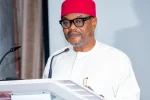
The Minister of Works, Senator Dave Umahi, disclosed this on Monday during an inspection of the Carter Bridge and Iddo Bridge projects in Lagos. Umahi was accompanied by the Minister of State for Works, Senator Mohammed Goronyo, and members of the National Assembly, including the Chairman of the House of Representatives Committee on Works, Akin Alabi.
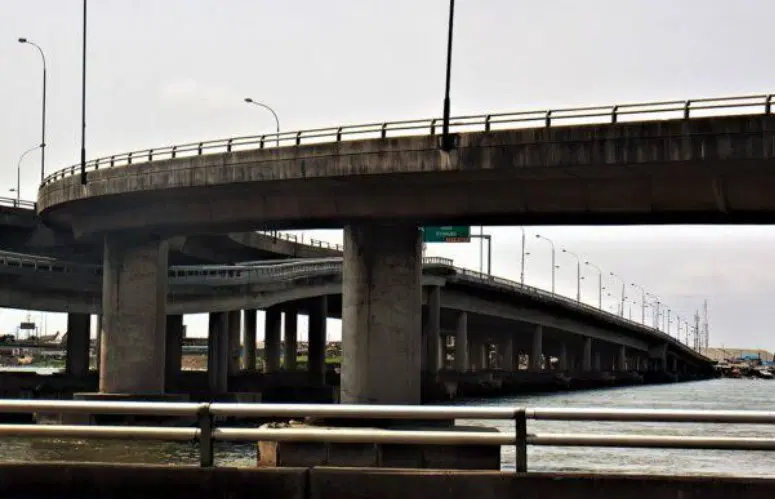
The minister said the government was accelerating the Carter Bridge reconstruction because of the bridge’s critical role in Lagos’ transportation network. According to him, the 1.58-kilometre bridge has remained in service for more than six decades without adequate maintenance, resulting in significant structural deterioration.
Umahi said an underwater survey revealed that several piles supporting the bridge had detached from their pile caps, while rust, foundation scouring and illegal sand mining had contributed to its deterioration. He explained that the Federal Government had completed a new design for the bridge, incorporating engineering features intended to improve traffic movement and increase the structure’s durability.
The redesigned bridge will feature additional ramps to ease congestion, while one carriageway will be constructed above another. A cable-stayed section will also be incorporated to provide sufficient clearance for navigation.
“Carter Bridge is 1.58km but you are going to see aesthetics, engineering and innovation,” Umahi said.
He added that the bridge would contain 105 spans and include features designed to improve traffic flow and protect the structure.
The contractor, China Civil Engineering Construction Company, CCECC, has completed about 15 per cent of preparatory activities, including establishing its project yard and constructing access roads. Umahi said piling work was expected to begin before the end of the week.
The Federal Government is also introducing additional protection around the bridge foundations, including gabions, to reduce erosion and scouring. The minister stressed that the bridge could not be completely shut during construction because of its importance to Lagos traffic.
“If we close Carter Bridge, Lagos will go into katakata (chaos). That is why we are maintaining it while the reconstruction is going on,” he said.
He added that regular monitoring and maintenance of the existing structure would continue until the replacement bridge was completed.
Umahi said similar measures were being applied to the Third Mainland Bridge, with the intervention expected to extend its lifespan by another 50 years. He expressed confidence that the reconstructed Carter Bridge could last for more than 100 years because of the additional engineering features incorporated into its design.
Earlier, the Federal Controller of Works in Lagos, Olufemi Dare, said the contractor had mobilised to the site and commenced access-road construction. Dare also briefed the minister on the Iddo Bridge project, stating that three failed spans had been replaced. He said spans 13, 14 and 15 had been reconstructed and the bridge elevated to provide improved clearance underneath.
According to him, the completed section is expected to reopen to traffic within about 10 days after the concrete cures. Work will then shift to the other section, where demolition will commence. Dare said drainage and Continuously Reinforced Concrete Pavement works on the Iddo Bridge were about 90 per cent complete. He expressed confidence that the Iddo Bridge intervention would be concluded within two months.
Senator Allwell Onyesoh described the Carter Bridge reconstruction as timely, noting that Lagos had experienced substantial population growth since the bridge was originally constructed. He assured that the National Assembly would support measures required to ensure successful completion of the project.
Alabi also described the reconstruction as long overdue, arguing that the bridge should have been rehabilitated and expanded much earlier. He commended Umahi’s commitment to the project, saying its completion would provide significant benefits to Lagos residents and Nigerians generally.