



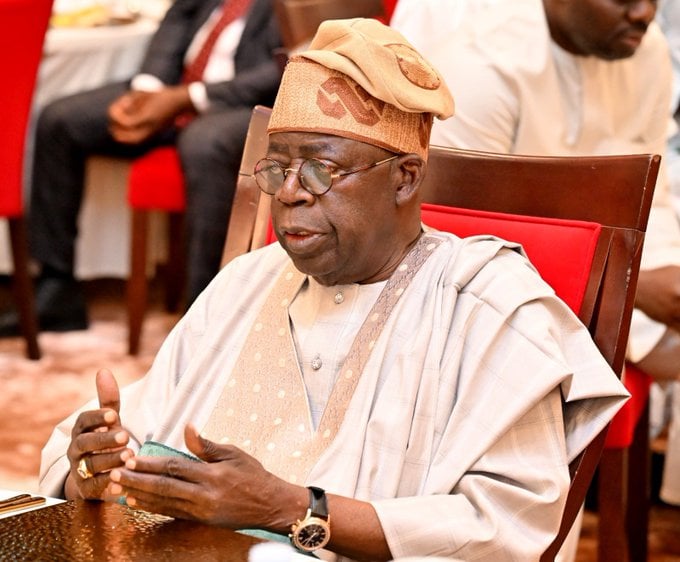
President Bola Tinubu has pledged to restore Nigeria’s government refineries, saying ongoing reforms will reposition the facilities for sustainable and profitable operations. Tinubu made the commitment on Thursday when he received the leadership of the Nigeria Union of Petroleum and Natural Gas Workers, NUPENG, led by its President, Sulaimon Oladiti, at the Presidential Villa in Abuja.
The president said the government was restructuring the economic model of the refineries to ensure they generate sustainable value rather than simply resume operations without long-term viability. According to Tinubu, the success of the government refineries would ultimately be measured by their ability to operate profitably and sustainably.
“The refineries that you mentioned are going to come back to work. We are just building a very firm reset and structural reworking of the economics of it,” he said.
Tinubu said his administration inherited both assets and liabilities from previous governments and had taken responsibility for addressing the challenges confronting the petroleum sector. He pledged to ensure the facilities work in a manner that delivers greater value to Nigerians.
“It is my responsibility now as President to fix it and make it work for the largest common value of our population. I take responsibility for that and I am going to do it,” he said.
The president also spoke about the government’s Compressed Natural Gas, CNG, programme, saying the initiative would continue to expand as part of efforts to lower transportation costs and strengthen energy security. He, however, expressed concern that the benefits of CNG were not reaching ordinary Nigerians quickly enough.
“Whatever benefit that is coming from CNG is going into the pockets of truck owners. It is not spreading as fast as I would like it, but it should spread,” Tinubu said.
Tinubu commended NUPENG for supporting government policies aimed at restructuring the economy. He recalled consultations with labour leaders before the removal of fuel subsidy, arguing that the decision was necessary to protect Nigeria’s long-term economic stability. According to him, resources saved from the subsidy regime have helped the government finance major infrastructure projects and strengthen public finances.
He mentioned the Lagos-Ibadan Expressway, Abuja-Kaduna-Kano Road and Sokoto-Badagry Highway among projects receiving investment under the reforms. The president urged Nigerians to remain patient with the economic changes, describing democracy and national development as processes requiring perseverance and sacrifice.
“It is through perseverance, endurance and determination that we can bring about relief. The pain may be temporary, but the joy is everlasting,” he said.
Earlier, NUPENG President Sulaimon Oladiti urged Tinubu to intervene in the growing practice of casual employment in Nigeria’s oil and gas industry.
Oladiti said the union maintained cordial relationships with international oil companies and indigenous operators but remained concerned about the treatment of workers, particularly in the upstream sector. He said the union had engaged some affected companies without achieving the desired changes.
“It is the casualisation of workers, particularly in the upstream sector,” Oladiti said.
He appealed to the president to use his office to address the situation and protect workers from what the union described as an unhealthy employment trend. Oladiti also welcomed the Federal Government’s plans to revive the country’s refineries, while urging authorities to rehabilitate depots operated by the Nigerian Pipelines and Storage Company, NPSC, across the country.
The renewed commitment to the government refineries comes as the administration continues efforts to reshape Nigeria’s downstream petroleum sector, expand domestic energy options and reduce the impact of transportation and fuel costs on households and businesses.