





The Association of Senior Civil Servants of Nigeria (ASCSN) has opposed what it described as a fresh attempt to privatise Unity Schools, warning that such a move could make quality secondary education unaffordable for millions of Nigerian children while weakening one of the country’s strongest symbols of national unity.
The union’s reaction followed reports that the Federal Government approved the concession of King’s College, Lagos, to its Old Boys’ Association under a Public-Private Partnership (PPP) arrangement.
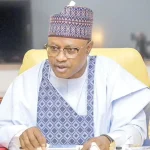
In a statement jointly signed by ASCSN National President, Shehu Mohammed, and Secretary-General, Joshua Apebo, the union argued that the decision could become a template for transferring the remaining 119 Federal Government Colleges to private interests. The union urged Nigerians to resist any effort to privatise the schools, insisting they remain a national asset that should be protected.
According to the union, the Unity School system was established in 1966 by Nigeria’s first Prime Minister, Sir Abubakar Tafawa Balewa, to promote national integration by bringing together students from different ethnic, religious and social backgrounds. ASCSN noted that the first three colleges were located in Okposi, later relocated to Enugu, Warri and Sokoto to serve the former Eastern, Western and Northern regions.
It added that Nigeria now has 120 Unity Schools, many of which continue to rank among the country’s most sought-after secondary schools because of their academic standards. The union warned that concessioning King’s College could eventually result in the transfer of all Unity Schools to private investors and political elites.
ASCSN recalled that similar proposals emerged in 1978 under former Head of State Olusegun Obasanjo and resurfaced during his civilian administration after 1999. According to the union, those plans included attempts to remove the junior secondary sections of Unity Schools as part of a broader restructuring programme.
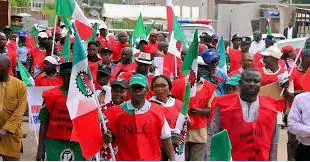
It said the move was successfully resisted through prolonged negotiations, industrial action lasting seven weeks, court proceedings and nationwide mobilisation involving labour unions, parents, students, teachers, civil society organisations, religious leaders and traditional rulers. The union noted that former President Goodluck Jonathan eventually ordered the restoration of the junior secondary sections in July 2010.
ASCSN argued that privatising the schools would conflict with Section 18 of the 1999 Constitution, which places responsibility on government to provide free and accessible education. The union also pointed to public education systems in countries such as the United States, the United Kingdom and Germany, saying governments in those nations continue to own and fund thousands of secondary schools.
It maintained that individuals or alumni groups interested in operating schools should establish private institutions instead of seeking control of Unity Schools. ASCSN further warned that privatisation could expose school facilities and large land holdings to commercial redevelopment, including hotels and shopping centres.
The union called on the Federal Government to abandon any proposal to privatise or concession Unity Schools and instead preserve and strengthen the institutions as a lasting national legacy dedicated to quality education and national integration.