



Thirty-three years after the historic June 12 election, many Nigerians still regard the 1993 presidential poll as the benchmark for transparency, credibility and public confidence in the country’s democratic journey. Conducted under a military transition programme and later annulled, the election remains a reference point whenever discussions arise about electoral reforms, voter confidence and democratic accountability.
As the nation marks the 33rd anniversary of the poll and the eighth Democracy Day celebration since June 12 was officially adopted as a national holiday, questions persist about whether Nigeria can once again conduct an election widely accepted as free, fair and credible.
The 1993 presidential election was conducted by the then National Electoral Commission under the leadership of the late Professor Humphrey Nwosu.
Unlike modern elections that rely on ballot papers, electronic accreditation and result transmission technologies, the process used the Option A4 voting system. Voters openly queued behind the candidate or political party of their choice, while electoral officials counted the queues and recorded results immediately.
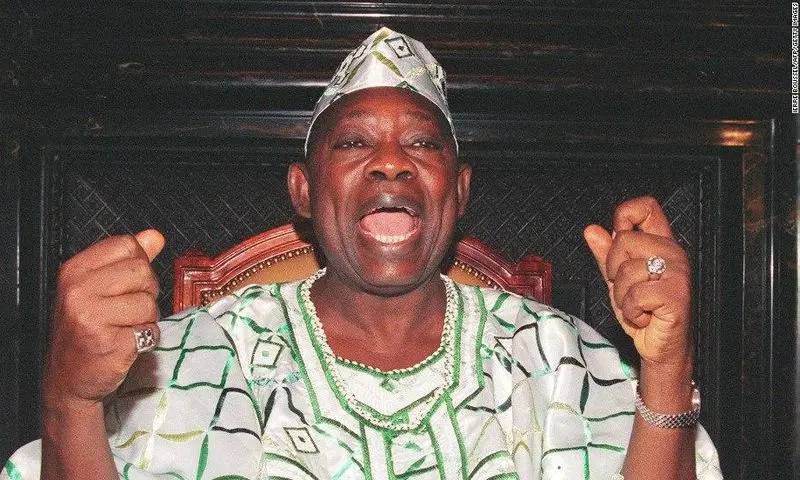
The contest featured only two candidates: the late Chief Moshood Kashimawo Olawale Abiola of the Social Democratic Party and Bashir Othman Tofa of the National Republican Convention.
More than 14 million Nigerians participated in the election. Available figures showed that Abiola secured over eight million votes, while Tofa received approximately six million votes. Many observers described the process as simple but highly transparent because voters, party agents and observers could easily verify results at polling centres.
Before the final declaration of results could be completed, the military administration of General Ibrahim Babangida annulled the election. The decision triggered widespread protests, political unrest and a prolonged democratic crisis that lasted several years.
The annulment prevented Abiola from assuming office despite widespread recognition that he had won the election. Nigeria eventually returned to civilian rule in 1999 with the election of former President Olusegun Obasanjo. The events surrounding the June 12 election continue to shape discussions about democratic governance and electoral integrity in Nigeria.
A major shift occurred in 2018 when former President Muhammadu Buhari formally recognised June 12 as Nigeria’s Democracy Day.
During the commemoration that year, Buhari apologised to the Abiola family and conferred the posthumous national honour of Grand Commander of the Federal Republic on the late businessman and politician. The following year, legislation officially moved Democracy Day celebrations from May 29 to June 12, ensuring that the date became permanently associated with Nigeria’s democratic struggle.
Abiola campaigned under the slogan “Hope 93” and promoted a welfare-focused agenda built around the theme “Farewell to Poverty.” Economic data from the National Bureau of Statistics showed that approximately 39.2 million Nigerians, representing 42.7 per cent of the population, lived below the poverty line in 1992.
Following the collapse of the transition programme and years of economic instability, the number reportedly rose to 67.1 million people, representing 65.6 per cent of the population. Subsequent studies highlighted a continued rise in poverty levels. A 2018 report by the Brookings Institution estimated that Nigeria had about 87 million people living in extreme poverty.
Current multidimensional poverty estimates indicate that more than 131 million Nigerians face varying forms of deprivation. These figures have fuelled continuing debates about how Nigeria’s economic trajectory might have differed had the outcome of the June 12 election been allowed to stand.
Nigeria’s Fourth Republic has witnessed several electoral reforms, yet many challenges remain. Since the return to civilian rule, elections have frequently been accompanied by allegations of ballot snatching, voter intimidation, result manipulation, violence and technological failures.
The introduction of innovations such as card readers and electronic accreditation was expected to strengthen public confidence. However, controversies surrounding result transmission and electoral transparency have persisted.
Diaspora voting remains unavailable, while electronic voting has yet to be fully implemented nationwide. Security concerns and voter apathy are also emerging as significant threats ahead of future elections, including the 2027 general elections.
One notable difference between the 1993 election and subsequent polls is the growing role of the judiciary. Since 1999, numerous election outcomes have been challenged in court. Presidential contests in 1999, 2003, 2007, 2011, 2019 and 2023 all generated significant legal disputes.
Following the 2007 elections, regarded by many observers as highly controversial, 1,291 petitions were filed. The figure declined to 732 in 2011 and 611 in 2015 before rising again to 786 in 2019 and 1,196 in 2023.
Former President Umaru Musa Yar’Adua himself acknowledged shortcomings in the 2007 election and subsequently established the Justice Mohammed Uwais Electoral Reform Committee to recommend improvements.
While some recommendations have been implemented, many observers argue that comprehensive reforms remain incomplete.
Three decades after it was conducted, the June 12 election remains a powerful symbol of electoral credibility and national unity. For many Nigerians, it represents a rare moment when voters across ethnic, religious and regional lines united behind a democratic process that enjoyed broad public trust.
As the country prepares for future elections amid concerns over insecurity, voter participation and institutional trust, the legacy of June 12 continues to serve as both a reminder of what was achieved and a challenge for what remains to be accomplished.