




Nigeria’s Permanent Representative to the United Nations, Jimoh Ibrahim, has said President Bola Tinubu will resolve Generational Grievances that have shaped insecurity and governance challenges in the country. He made the statement at the United Nations headquarters in New York, stressing that ongoing reforms and diplomatic engagement are aimed at addressing long-standing structural issues. He added that resolving generational grievances remains central to national stability efforts.
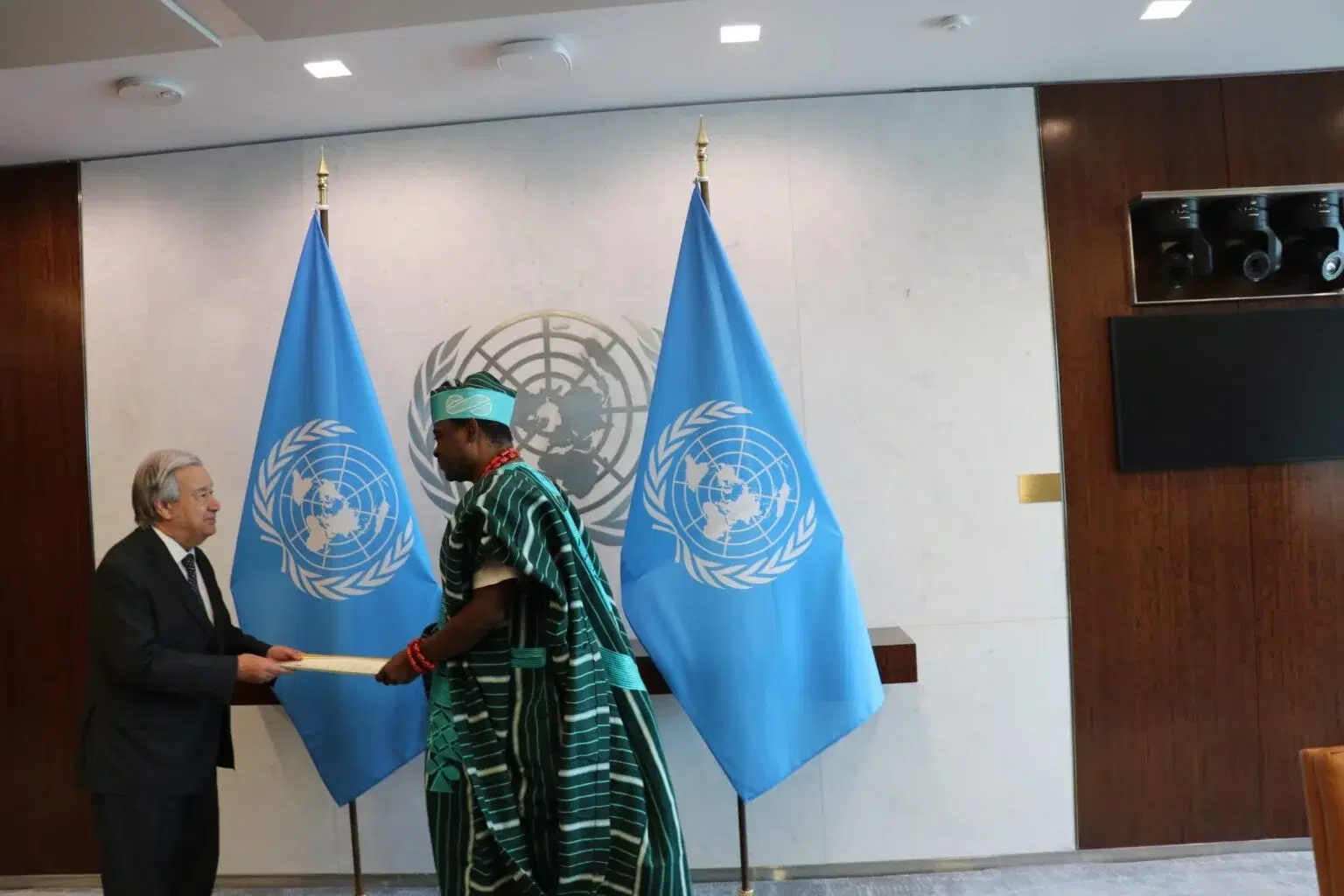
Ibrahim delivered the remarks after presenting his Letter of Credence to United Nations Secretary-General António Guterres. The engagement marked Nigeria’s continued diplomatic representation at the global institution, reinforcing its participation in multilateral governance discussions.
He situated Nigeria’s current governance and security concerns within a broader historical framework, arguing that many of them stem from unresolved structural tensions over time. According to him, these long-standing issues continue to influence national stability and development outcomes.
Ibrahim stated that President Tinubu’s administration is committed to resolving Generational Grievances through reforms and sustained policy direction. He linked this goal to efforts aimed at strengthening governance systems and improving national resilience.
He also highlighted Nigeria’s renewed diplomatic engagement at the United Nations as part of a broader strategy to rebuild international trust and expand cooperation. According to him, such engagement is necessary for addressing security and development challenges that extend beyond domestic borders.
The envoy noted that Nigeria is seeking stronger multilateral partnerships to address transnational security threats, including terrorism and organized crime. He stressed that these challenges require coordinated responses involving both national and international stakeholders.
Ibrahim further explained that resolving Generational Grievances will depend on sustained reform implementation and effective collaboration with global partners. He maintained that this approach aligns with broader international expectations on governance and stability.
The remarks reinforce Nigeria’s positioning of long-term structural challenges as central to its governance and security discourse. The framing of generational Grievances highlights the scale of historical issues influencing present-day policy concerns.
It also reflects Nigeria’s ongoing reliance on diplomatic engagement as part of its strategy to address domestic and regional security pressures. This approach may continue to shape its participation in international policy and security discussions.