


Fresh political tensions have emerged within the opposition as Wike-backed PDP fumes over reported moves by allies of Oyo State Governor, Seyi Makinde, to explore a possible alliance with the African Democratic Congress ahead of the 2027 general elections.
The development signals deepening divisions within the Peoples Democratic Party at a time of ongoing internal restructuring.
The PDP has been grappling with internal disputes since the aftermath of the 2023 general elections, with rival factions struggling for control of the party’s structure and direction.
One bloc is associated with the Minister of the Federal Capital Territory, Nyesom Wike, while another grouping is linked to governors including Seyi Makinde.
These divisions have persisted despite reconciliation efforts, with disagreements over leadership, strategy, and the party’s future positioning ahead of the next election cycle.
The situation has prompted some stakeholders to consider alternative political arrangements outside the PDP framework.
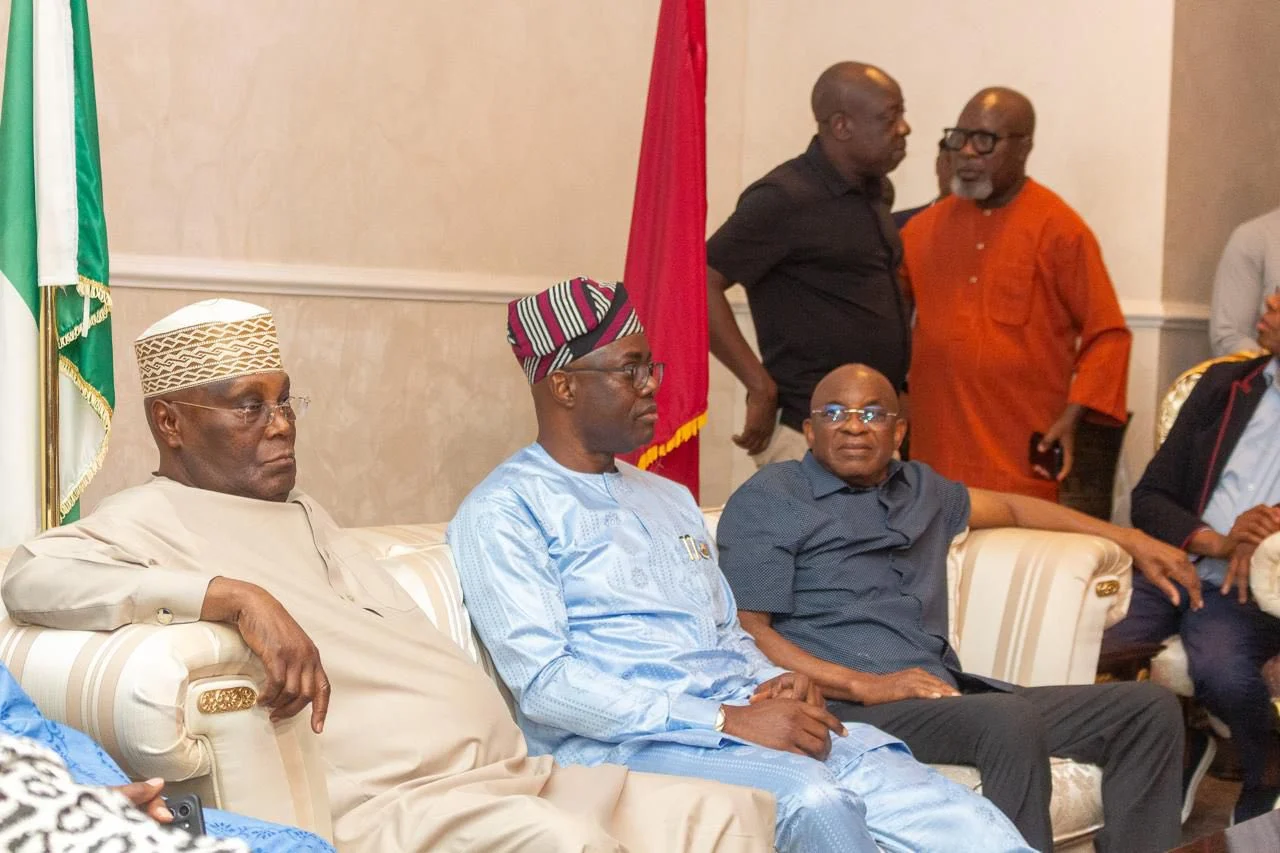
The latest controversy followed a high-level meeting in Abuja involving Makinde and prominent political figures linked to the African Democratic Congress.
Among those reported at the meeting were former Senate President David Mark and former Osun State Governor Rauf Aregbesola, both of whom have been associated with broader coalition talks among opposition figures.
Sources familiar with the meeting indicated that discussions centred on building a coalition capable of challenging the ruling party in 2027.
The talks reportedly explored options around political alignment, shared platforms, and strategic cooperation among opposition actors.
Governor Makinde, speaking after the engagement, described it as part of ongoing consultations, noting that stakeholders were interacting on issues concerning Nigeria’s political future.
He characterised the meeting as “a show of solidarity,” while not explicitly confirming a formal alliance agreement.
However, the Wike-aligned faction of the PDP reacted strongly to the development. In an official statement issued by its National Publicity Secretary, Jungudo Mohammed, the faction rejected suggestions that the PDP was involved in any alliance discussions with the ADC.
The statement maintained that the party had not authorised any such engagement and distanced itself from the reported meeting.
It further emphasised that claims linking the PDP to coalition negotiations were inaccurate and did not reflect the position of the party’s recognised leadership.
The response underscores existing tensions within the PDP, where parallel structures and competing claims to authority have complicated decision-making processes.
Compounding the situation is the leadership dispute within the ADC itself. The party has been dealing with internal challenges, including recognition issues involving different leadership blocs.
The Independent National Electoral Commission had recently taken steps affecting the recognition of a faction within the ADC, including the leadership associated with David Mark.
This development has added uncertainty to any potential alliance discussions involving the party.
Political observers note that the convergence of PDP factional disputes and ADC leadership issues creates a complex environment for coalition-building ahead of the 2027 elections.
The situation in which Wike-backed PDP fumes highlights the fragility of opposition unity in Nigeria’s evolving political landscape.
Internal divisions within major parties may weaken their ability to present a cohesive electoral strategy, while ongoing alliance talks signal attempts to reorganise political forces ahead of 2027.
The development also reflects a broader trend of political realignment, where established parties and emerging platforms are exploring new partnerships to strengthen their competitiveness.
At the same time, leadership disputes within both the PDP and ADC could affect the viability and credibility of any proposed coalition arrangement.