





The United States Supreme Court has struck down global tariffs imposed by former President Donald Trump on Nigeria and dozens of other countries, ruling that the law he relied on does not authorise such sweeping import duties, the court said on Friday.
In April 2025, Trump introduced broad tariffs on imports from many countries, including a baseline 10 per cent duty on most trading partners and higher “reciprocal” tariffs on nations with significant trade deficits with the United States, including Nigeria.
The tariffs were implemented under the International Emergency Economic Powers Act (IEEPA), a 1977 statute that allows the president to regulate imports during declared national emergencies.
Legal challenges were filed by several U.S. states and businesses arguing that the executive branch exceeded its authority by using emergency powers to impose broad import duties without explicit approval from the U.S. Congress.
In a 6–3 majority decision, the Supreme Court ruled that IEEPA does not authorise the president to impose sweeping tariffs on imports, noting that congressional approval is required for such measures.
Chief Justice John Roberts wrote that the law contains no reference to tariffs or duties and that the taxing power belongs to Congress.
The judgment overturned the use of emergency powers to impose tariffs on Nigeria and about 184 other countries, invalidating the broad tariff scheme that had been central to Trump’s trade strategy.
Three justices dissented, arguing that the tariffs could be considered lawful under the statute’s text and historical practice.
The court did not provide clarity on whether importers would be entitled to refunds for tariffs already collected under the former policy.
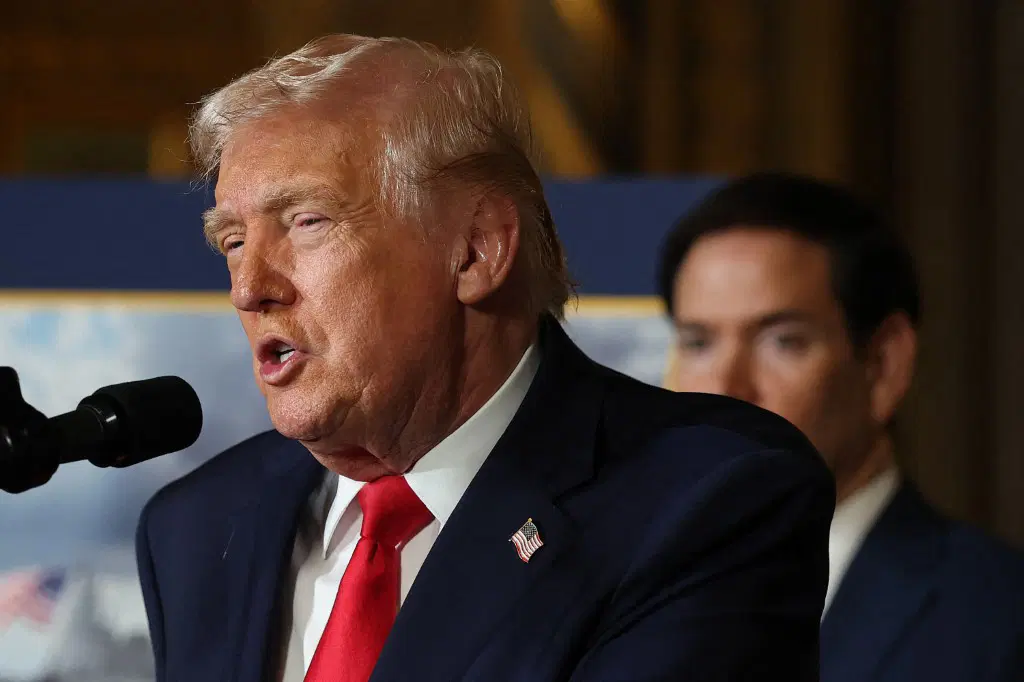
Following the ruling, Trump described the decision as “deeply disappointing” and said he was “absolutely ashamed” of some members of the court for not backing his tariff policy, according to remarks he made at the White House.
He criticised certain justices for their votes against the tariff programme and signalled that the administration may pursue other avenues to impose trade duties within legal limits.
The Supreme Court’s ruling removes the legal basis for the broad tariffs that had been applied to Nigeria and other nations, potentially affecting future trade dynamics and U.S. import duties.
The decision emphasises constitutional limits on presidential authority in trade matters, reinforcing the role of Congress in granting tariff powers.
Uncertainty remains over whether duties already collected under the old tariff regime will be refunded or how future trade measures will be structured under separate statutory authorities.