


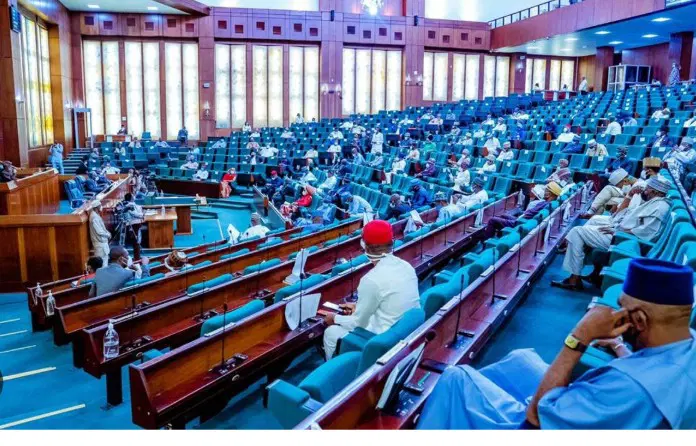
The House of Representatives on Thursday passed President Bola Tinubu’s proposed N58.18 trillion 2026 Appropriation Bill for second reading, endorsing the federal government’s fiscal framework for the upcoming financial year, lawmakers said.
President Tinubu presented the 2026 Appropriation Bill to a joint session of the National Assembly on December 19, 2025, outlining policies for macroeconomic consolidation and expanded infrastructure spending. The budget was christened
“The Budget of Consolidation, Renewed Resilience and Shared Prosperity”.
The Senate had earlier passed the bill for second reading in December 2025, advancing the legislative process ahead of detailed committee review and budget defence sessions in both chambers.
During the House plenary, the Leader of the House, Professor Julius Ihonvbere, outlined the general principles of the budget and said it reflected the administration’s commitment to stabilising the economy, strengthening security and boosting capital expenditure.
Ihonvbere cited key macroeconomic indicators to support legislative backing, including a projected economic growth rate of 3.98 per cent for 2026, a reduction in inflation to about 14.45 per cent and improved fiscal revenues and exports. He said improved foreign direct investment and increased external reserves were positive signs for the economy.
Under the proposed fiscal plan, total revenue is projected at N34.33 trillion against total expenditure of N58.18 trillion, leaving a fiscal deficit of N23.85 trillion. Non‑debt recurrent expenditure is set at N15.25 trillion, and capital expenditure is estimated at N26.08 trillion.
The allocations prioritise key sectors, with N5.41 trillion for security and defence, N3.56 trillion for infrastructure, N3.54 trillion for education and N2.48 trillion for health.
The Speaker of the House, Tajudeen Abbas, led a voice vote that saw the bill pass second reading without opposition, after which plenary was adjourned to allow committee‑level scrutiny and defence with relevant federal ministries, departments and agencies.
Passing the budget for second reading moves the 2026 budget process forward toward detailed examination, revisions and eventual harmonisation between the National Assembly and the executive.
The high capital expenditure component signals the legislatures and the executive’s shared focus on infrastructure and development spending within the fiscal framework.
Economists note that the structure of the budget, with expanded capital allocations, could influence Nigeria’s economic trajectory by prioritising growth drivers and human capital development, though fiscal deficit levels will require careful management.
The budget process now enters a phase of committee hearings and high‑level engagement with federal officials as lawmakers assess sector‑by‑sector proposals ahead of final passage.
The House of Representatives has passed President Tinubu’s N58.18trillion 2026 budget for second reading, signalling legislative support for macroeconomic stability, security strengthening and expanded capital expenditure. The bill will now proceed to detailed committee review and defence before final enactment.