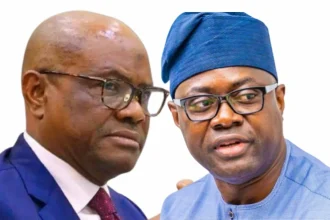






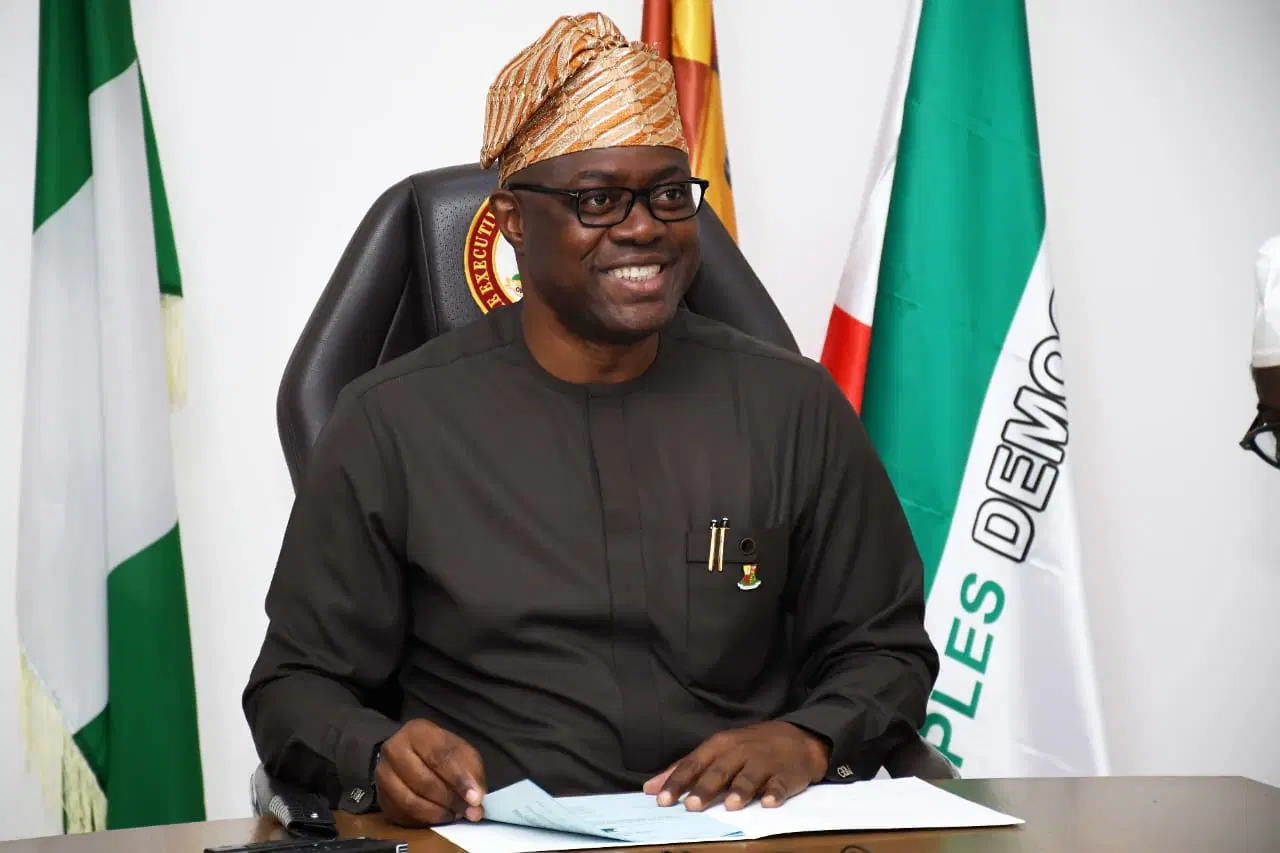
Governor Seyi Makinde of Oyo State has reiterated his commitment to the Peoples Democratic Party (PDP), saying he remains “comfortable in the PDP” and has no plans to defect to the ruling All Progressives Congress (APC).
He stated this on Thursday after a meeting with President Bola Ahmed Tinubu at the Presidential Villa in Abuja.
Makinde spoke to reporters shortly after the closed-door session with the President, dismissing speculation that his visit was linked to a potential shift in political allegiance amid a recent wave of defections by some of his former colleagues from the PDP to the APC.
When asked whether he might also join the APC, Makinde stated unequivocally, “I am comfortable in the PDP.”
The governor said the meeting with Tinubu was focused on governance issues rather than party politics. He emphasised that the President is the leader of all Nigerians and that discussions on national development must extend beyond partisan lines.
Makinde noted that addressing complex national challenges may require a bipartisan approach, and that cooperation between different political parties can be necessary to identify solutions in the country’s best interest.
“There are moments in a country’s life when a bipartisan approach is required,” he said, adding that “it should not be an APC-only or PDP-only conversation” but a collective effort to advance national development.
Makinde’s clarification comes amidst significant political realignment ahead of the 2027 general elections, during which several prominent members of the PDP have defected to the APC, reducing the opposition party’s representation at the state level.
Despite these shifts, Makinde affirmed his loyalty to the PDP and rejected suggestions that his meeting with the President signalled any intention to change political parties.
Observers note that Makinde’s remarks underscore an emphasis on governance issues and a continued commitment to his political base even as discussions on national security, economic development and intergovernmental cooperation continue at the federal level.
His comments also reflect broader conversations within Nigeria’s political landscape about the roles of party loyalty, cross-party collaboration and governance priorities as political actors engage with federal authorities and prepare for future electoral contests.