





An investigation has revealed that criminal networks operating in Burkina Faso and Ghana are luring Nigerian youths with promises of employment, only to detain, exploit and coerce them into criminal activities, human trafficking and financial exploitation, according to accounts from victims and officials.
Criminal syndicates across several West African countries, including Burkina Faso and Ghana, have targeted unemployed and underemployed Nigerian youths with false job offers and promises of relocation for work, the investigation found.
These schemes often involve staged recruitment processes and forged documents that mislead hopeful migrants about employment prospects abroad.
West Africa has long been part of irregular migration routes used by migrants seeking work overseas. Organized criminal networks across the region facilitate movement, often exploiting migrants’ vulnerabilities for forced labour, sex trafficking and fraud operations.
Reports prior to this investigation note significant human trafficking and forced labour activities in Burkina Faso and neighbouring states involving Nigerian victims.
Victims recount that they were persuaded by acquaintances or contacts to travel to cities such as Gaoua in Burkina Faso or destinations in Ghana with assurances of legitimate jobs and salaries.
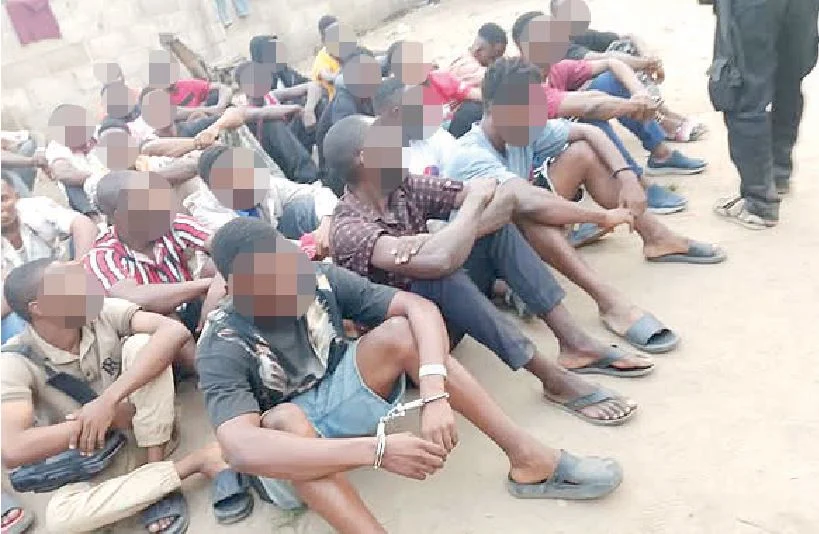
Upon arrival, many were housed in crowded accommodations and stripped of their phones, travel credentials, and savings.
One victim said he was taken to a flat with dozens of other Nigerian men and later coerced into recruiting others as part of the criminal network’s operations. Women victims were additionally subjected to exploitation including prostitution, according to the investigation.
Investigation findings also pointed to exploitation in Ghana, where some Nigerians were reportedly subject to dehumanising treatment linked to coordinated trafficking and fraud schemes.
The proximity of Ghana to Burkina Faso was cited as a factor in the expansion of these network activities.
Criminal syndicates use fake offices, staged videos, and forged credentials to create the appearance of legitimate employment opportunities in Europe or North America. Instead, victims are often trapped in conditions of forced labour or criminal coercion within West Africa.
The accounts underscore the scale and sophistication of cross‑border criminal networks that prey on the aspirations of Nigerian youths seeking better opportunities.
These networks exploit trust and desperation, misusing victims’ savings and subjecting them to continued exploitation and human rights abuses.
The findings also highlight broader regional challenges related to irregular migration, organized crime and human trafficking in West Africa, where porous borders and limited enforcement capacity facilitate the movement and exploitation of vulnerable migrants.
Law enforcement cooperation and protective measures for migrants have been areas of ongoing concern for regional authorities and international organisations.