



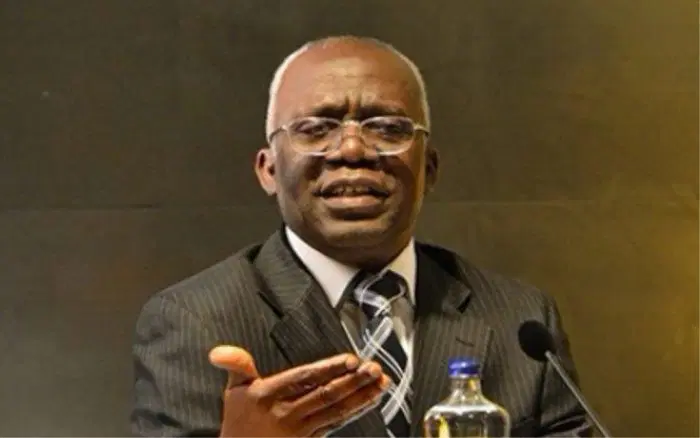
Senior Advocate of Nigeria Femi Falana has challenged the legal basis of actions taken by the Minister of the Federal Capital Territory, Nyesom Wike, before the recent Area Council elections, saying the minister lacked the authority to declare a public holiday or impose movement restrictions.
The comments by Falana followed the Abuja Municipal Area Council elections held on February 21. Ahead of the polls, Wike issued a statement declaring a work-free day on Friday and placing limits on movement across the Federal Capital Territory until the day of the elections.
The Federal Capital Territory Minister made the announcements in a statement signed by his Senior Special Assistant on Public Communications and Social Media ahead of the elections.
In his statement, Falana said the minister’s declaration of a public holiday and the restriction of movement lacked statutory backing because only certain authorities have power to make such orders.
He noted the Constitution and relevant laws grant the President and the Minister of Interior authority to declare public holidays, whereas governors can do so within their states. He said Wike does not hold those powers for the FCT.
Falana asked whether the President had authorised the restriction of movement, noting that courts in the territory sat as usual on the declared holiday and that security forces did not enforce the order.
He also questioned whether Wike complied with the order himself, referring to the minister’s own conduct during the period in question.
Falana said the minister does not play a role in the conduct of elections and that the Independent National Electoral Commission is solely responsible for election activities.
Falana’s remarks raise questions about the scope of the powers of the FCT Minister in relation to public holidays and movement restrictions under Nigerian law. They may prompt legal review of the basis for executive orders issued in the run-up to elections.
The comments also reflect broader public debate around roles and responsibilities in managing election environments, particularly the distinction between administrative authorities and electoral bodies.