





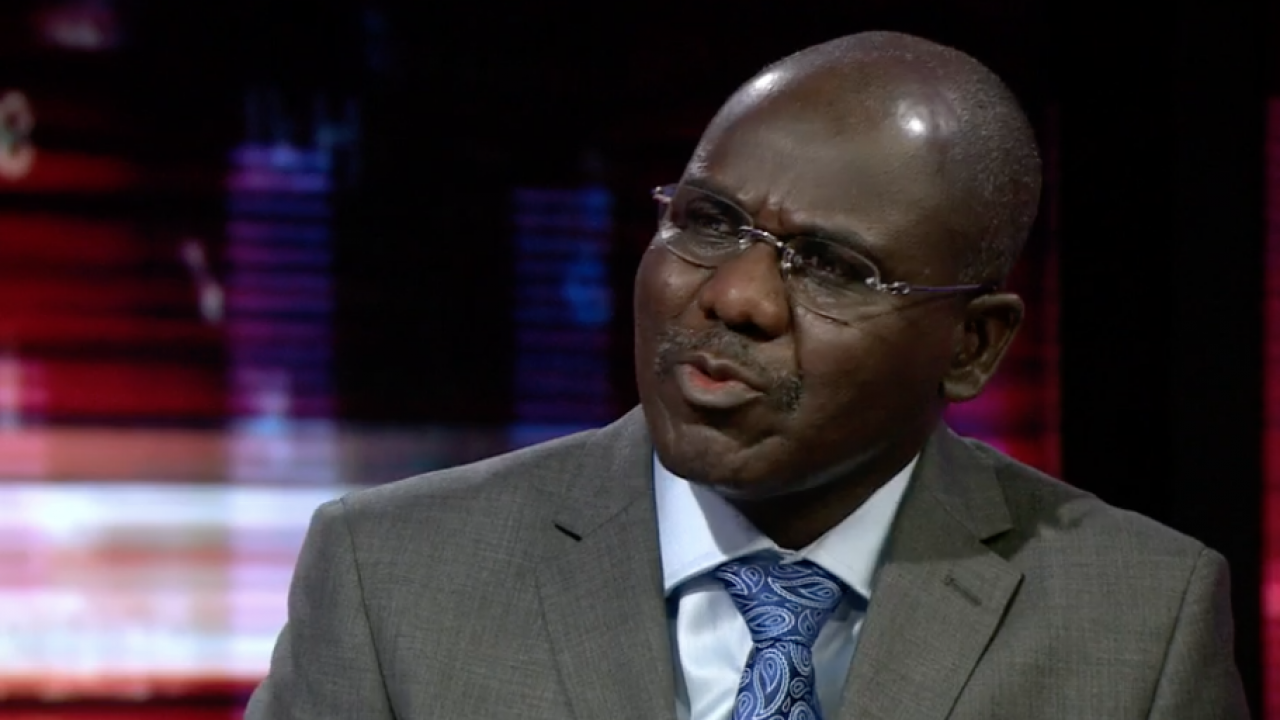
A former Chief of Army Staff, Lieutenant General Tukur Buratai (retd.), has warned that the increasing deployment of the Armed Forces of Nigeria for internal security operations across the country is weakening the capacity of the Nigeria Police Force and other civilian security agencies, even as it offers short‑term stability.
Buratai made the remarks on Monday while delivering the keynote address at the 2026 Armed Forces Celebrations and Remembrance Day lecture in Abuja.
Buratai said the widespread military presence in all 36 states and the Federal Capital Territory is gradually eroding the growth and effectiveness of civil security institutions that are constitutionally mandated to lead internal security, including the police and state intelligence services.
“The extensive deployment of the Armed Forces of Nigeria in internal security provides immediate stability, but it also perpetuates a cycle of dependency that weakens civil police capacity and strains defence resources,” he said.
According to Buratai, the trend has produced a dangerous imbalance: soldiers are overstretched, defence expenditures are diverted to routine policing duties, and the Armed Forces’ readiness for conventional external threats is diminished.
He underscored that under the Constitution, the military’s primary roles are defending the nation against external aggression, protecting territorial integrity, suppressing insurrection and providing aid to civil authorities only when necessary.
Buratai stressed that internal security should fundamentally be civil‑driven and intelligence‑led, with the police and state security services taking the lead in responding to crime and unrest.
He said the military’s expanded internal security role must not permanently replace its core mandate or weaken civilian institutions. “Internal security, more or less, should be civil‑driven and intelligence‑driven by the state intelligence services and the police, essentially,” he said.
To address the concerns, Buratai called for a clear, time‑bound and conditions‑based exit strategy to gradually transfer internal security responsibilities back to civilian authorities while preserving the military’s operational readiness for its core defence functions.
He argued that Nigeria’s long‑term security and democratic stability depend on a strong, well‑equipped police and intelligence network with the military reserved for exceptional circumstances.
In the same event, the Minister of Defence, General Christopher Musa (retd.), acknowledged the importance of broader engagement in tackling insecurity, calling for coordinated efforts involving local governments, traditional rulers, religious leaders and communities to disrupt criminal networks.
He reiterated the Federal Government’s commitment to strengthening a professional, self‑reliant armed forces and enhancing defence industrial capacity through indigenous production and strategic reforms.
The remarks by Buratai highlight ongoing debates about the balance between military and civilian roles in Nigeria’s security architecture, as authorities seek durable frameworks that protect citizens while respecting constitutional mandates for internal security and civil liberties.