






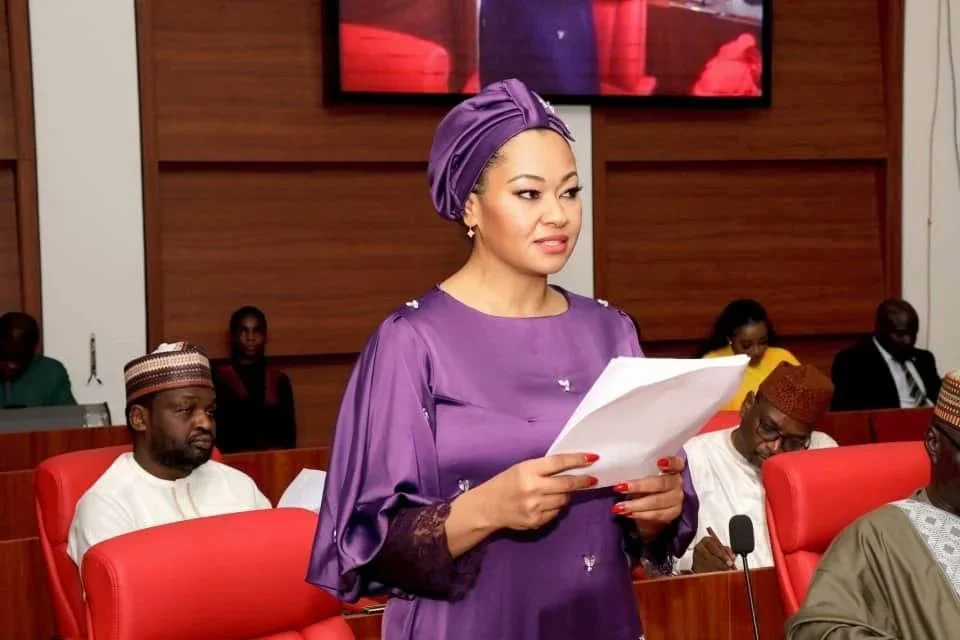
The legal dispute over the suspension of Senator Natasha Akpoti‑Uduaghan (Kogi Central) has taken a new turn as Senate President Godswill Akpabio on Thursday filed an appeal at the Supreme Court of Nigeria seeking to overturn decisions of lower courts on the matter.
Court documents marked SC/CV/1111/2025 show that Akpabio, listed as the appellant, filed the application before the country’s apex court to “regularise and sustain” his appeal challenging the rulings of the Federal High Court in Abuja and the Court of Appeal.
Akpoti‑Uduaghan, the Clerk of the National Assembly, the Senate of the Federal Republic of Nigeria and the Chairman of the Senate Committee on Ethics, Privileges and Public Petitions, Senator Neda Imasuen, are named as respondents in the suit.
The dispute stems from events in February 2025 when Senator Akpoti‑Uduaghan raised issues relating to parliamentary privilege and alleged procedural breaches during a plenary session, prompting a referral to the Senate Committee on Ethics, Privileges and Public Petitions and subsequent disciplinary action, including a six‑month suspension.
Dissatisfied with the Senate’s action, Akpoti‑Uduaghan approached the Federal High Court in Abuja, arguing that the process leading to her suspension violated her right to a fair hearing and did not comply with the Senate’s Standing Orders. In July 2025, the trial court described the suspension as “excessive and unconstitutional.”
Akpabio then appealed the decision to the Court of Appeal. With the appellate proceedings unresolved, he has now taken the matter to the Supreme Court, seeking an extension of time to apply for leave to appeal, leave to appeal on grounds of mixed law and fact, and orders deeming his notice of appeal and brief of argument properly filed.
Akpabio’s legal team has argued that the Senate acted within its constitutional powers under Section 60 of the 1999 Constitution (as amended), which empowers the National Assembly to regulate its internal procedures, and that a presiding officer is not obliged to immediately rule on every point of privilege raised on the floor.
Senator Akpoti‑Uduaghan, for her part, has maintained that her suspension was unlawful, excessive and carried out without a fair hearing, contending that the Senate failed to follow its own rules and Standing Orders before referring her to the ethics committee and imposing disciplinary measures.
It was confirmed on Wednesday, January 21, 2026, that Akpoti‑Uduaghan’s legal counsel was served with the Supreme Court processes, joining all parties before the apex court and paving the way for a full hearing.
The case also features a related contempt issue linked to a social media post made by the senator during the pendency of the suit, which a Federal High Court previously ruled violated a restraining order and imposed a fine and public apology. Akpoti‑Uduaghan has challenged that ruling on appeal.
Legal observers say the Supreme Court’s eventual ruling could clarify the balance between legislative discipline and judicial oversight, particularly on how internal parliamentary procedures intersect with constitutional rights.