






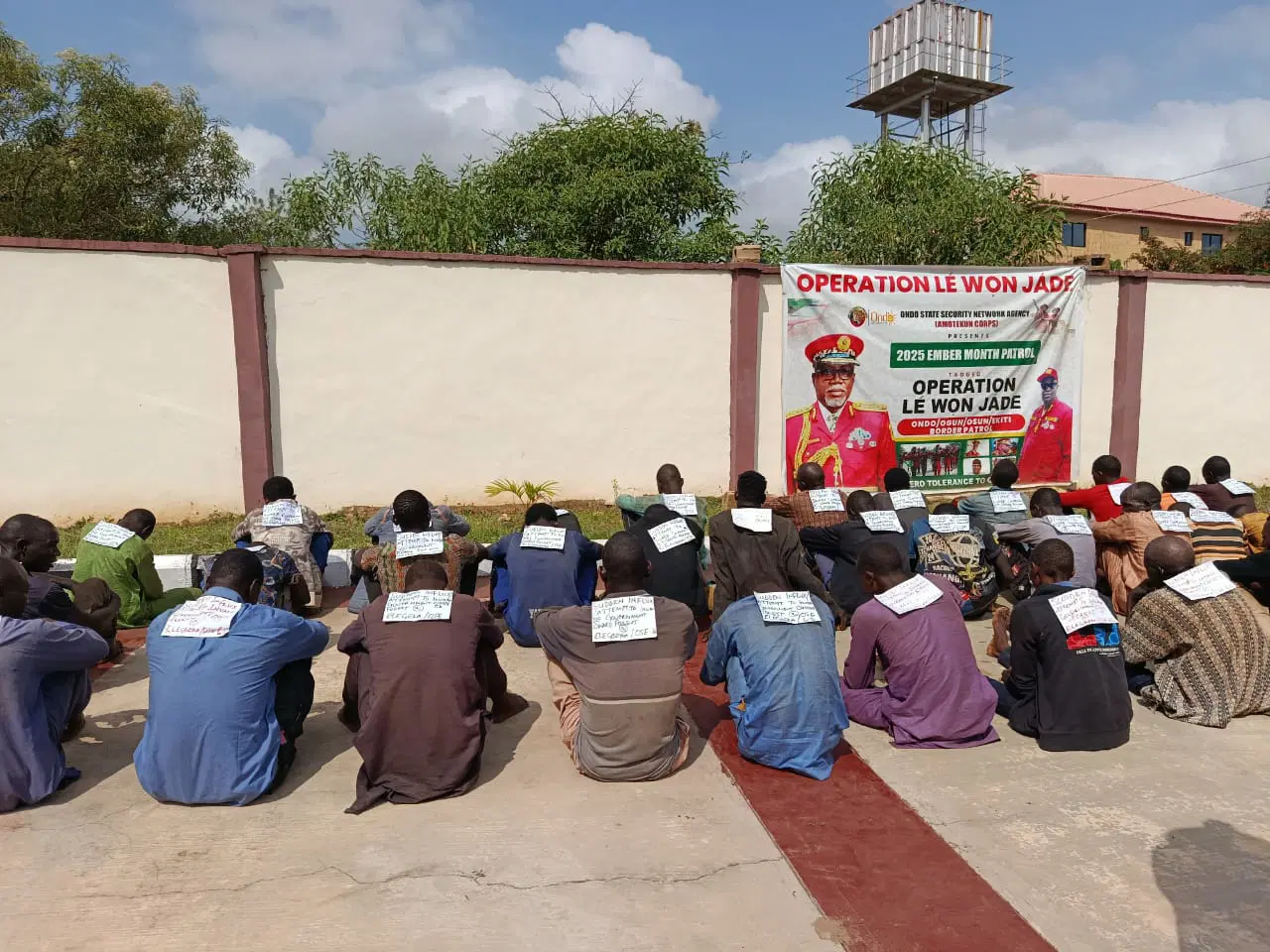
Federal and regional security forces carried out airstrikes in Ondo State targeting suspected terrorists fleeing Sokoto, alongside coordinated arrests by the Amotekun security network. Officials confirmed that 39 individuals linked to the terror group were apprehended in a series of intelligence-led operations designed to neutralize imminent threats to communities.
The operation reflects an integrated approach between federal agencies and regional security initiatives. Amotekun, established to provide localised security, has played a critical role in intelligence gathering and operational support, complementing federal counter-terrorism measures. Analysts note that the combination of aerial surveillance and on-ground arrests demonstrates the evolving capacity of Nigeria’s security infrastructure to respond rapidly to emerging threats.
Security observers highlight that the success of these interventions is tied to effective inter-agency coordination, timely intelligence, and strategic deployment of resources. The operations underscore the importance of combining national security frameworks with regional structures to mitigate risks efficiently and protect citizens.
The implications of the operation extend beyond immediate threat neutralization. A visible security presence deters potential insurgent activities, strengthens public confidence in state and regional institutions, and ensures continuity of daily social and economic life in affected areas. Government agencies responsible for enforcement, including the military, police, and Amotekun units, are expected to maintain vigilance while monitoring compliance with operational protocols to prevent unintended consequences.
Experts argue that counter-terrorism success requires sustained investment in institutional capacity, community engagement, and technological support. Drone surveillance, improved communications networks, and intelligence sharing mechanisms are critical to sustaining security gains. Equally, collaboration with local communities encourages reporting of suspicious activities and fosters a culture of resilience and vigilance.
The broader governance perspective highlights the intersection between security, public policy, and citizen welfare. Effective counter-terrorism operations not only address immediate threats but also reinforce trust in institutions and provide the foundation for socio-economic stability. Maintaining transparency and accountability in these operations ensures legitimacy, strengthens rule of law, and prevents human rights violations.
In conclusion, the recent airstrikes in Ondo and coordinated Amotekun arrests illustrate the strategic benefits of multi-level security coordination in Nigeria. Continued integration of federal and regional capacities, sustained institutional investment, and proactive community engagement are essential to ensuring long-term public safety, national cohesion, and confidence in governance. These efforts underscore the critical role of structured security frameworks in protecting citizens while reinforcing institutional credibility.