


Nigeria’s industrial space in 2025 was significantly shaped by organised labour actions, with a series of strikes, shutdown threats and government‑brokered truces affecting key economic sectors and drawing national attention to labour relations and policy.
These developments underscored the enduring influence of labour unions on the economy, public policy and industrial stability.
One of the most prominent disputes occurred at the Dangote Petroleum Refinery, where tensions escalated in September after management dismissed more than 800 Nigerian employees, alleged by the Petroleum and Natural Gas Senior Staff Association of Nigeria (PENGASSAN) to be linked to unionisation efforts.
PENGASSAN responded with a nationwide strike and halted crude and gas supply, which was reported to have contributed to a drop in national oil output by about 16 per cent and disrupted energy and port activities.
The Federal Government intervened through mediation, culminating in the reinstatement of the workers without loss of pay and formal recognition of unionisation rights within the refinery. The dispute ended with PENGASSAN calling off the strike after management’s concessions and government facilitation.
In parallel, the Nigeria Union of Petroleum and Natural Gas Workers (NUPENG) confronted the refinery over plans to use imported compressed natural gas trucks, warning of a nationwide shutdown beginning in early September. Negotiations brokered by the government and other stakeholders led to a Memorandum of Understanding (MoU) that allowed voluntary union membership and halted the threatened action.
Education and academic labour groups also took industrial action.
The Non‑Academic Staff Union of Educational and Associated Institutions (NASU) and the Senior Staff Association of Nigerian Universities (SSANU) issued ultimatums and raised strike threats in mid‑September, later participating in nationwide protests to press demands on funding and conditions for members.
The Academic Staff Union of Universities (ASUU) initiated a nationwide warning strike in October over funding shortfalls and delays in implementing agreements with the Federal Government.
After nearly ten days of halted academic activities and further negotiations, the strike was suspended with a deadline for resolving outstanding issues, and by late December 2025 a consensus was reportedly reached on a revised agreement effective from January 1, 2026.
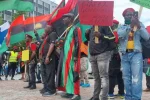
Organised labour also mobilised on broader national issues, with the Nigeria Labour Congress (NLC) leading peaceful protests in December 2025 to call for urgent action against escalating insecurity, including banditry and kidnappings, which it said threatened economic and social stability.
Demonstrations took place across states including Abuja and Lagos, emphasising labour’s engagement beyond workplace conditions into national security concerns.
Throughout 2025, labour actions highlighted the complex interplay between industrial relations and government policy.
Government proposals such as the National Industrial Relations Policy, 2025, which aimed to regulate union activities, drew criticism from labour leaders who argued against any attempt to criminalise strikes, asserting constitutional protections for industrial action and worker rights.
The events of 2025 demonstrated that organised labour remains a formidable actor in Nigeria’s socio‑economic landscape.
The year’s strikes negotiated truces and protests brought labour rights, industrial policy and governance into national discourse, even as stakeholders continue to search for durable frameworks for industrial harmony and economic growth.