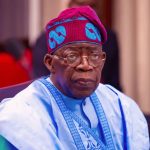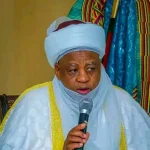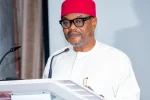





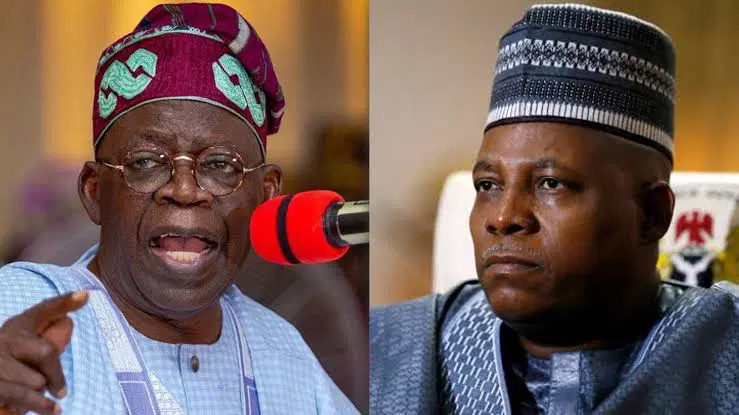
Diverse political leaders, socio-cultural organisations and public figures have offered contrasting opinions on the APC Muslim-Muslim Ticket ahead of the 2027 presidential election, with many insisting that governance, competence and national development should outweigh religious considerations. The renewed conversation follows indications that President Bola Tinubu and Vice President Kashim Shettima are expected to retain the ruling party’s presidential ticket for the next general election.
The National Organising Secretary of Afenifere, Abagun Kole Omololu, said the organisation remains committed to justice, constitutional democracy and good governance rather than religious politics.
He stressed that Afenifere is not a religious body but a pan-Yoruba socio-political movement established to advance the interests of the Yoruba people. According to him, Nigerians are more concerned about insecurity, economic opportunities, affordable living, healthcare, education and accountable leadership than the religious identities of political office holders.
Omololu argued that history has shown Nigerians often reward competence over faith, citing examples including the administrations of Lateef Jakande and Rafiu Jafojo in Lagos, the 1993 MKO Abiola–Babagana Kingibe ticket, and other political leaders whose performance, rather than religion, defined their legacies. He maintained that President Tinubu and Vice President Shettima have not displayed religious bias in office and urged Nigerians to evaluate leadership through measurable performance instead of religious affiliation.
Former Speaker of the Ondo State House of Assembly, Rt. Hon. Bakita Bello, said leadership should be judged by competence, integrity, compassion and courage rather than religious identity.
While acknowledging that religion often influences politics, he argued that neither Muslim-Christian nor Muslim-Muslim political combinations have automatically translated into improved governance, security or economic prosperity. He challenged Nigerians to assess political leaders based on their commitment to improving citizens’ welfare rather than religious composition.
The National Vice Chairman (South-West) of the Julius Abure-led Labour Party faction, Comrade Abayomi Arabambi, dismissed criticism of the APC Muslim-Muslim Ticket, insisting that competence should remain the primary consideration in leadership selection.
According to him, Northern Nigeria’s political realities influenced the decision, adding that replacing a northern Muslim with a northern Christian may not necessarily produce the expected political outcome. Arabambi argued that insecurity affects Nigerians regardless of religion and urged citizens to judge the Tinubu administration based on its economic policies, fuel supply improvements and governance rather than religious sentiments.
Coordinator of the Yoruba Progressive Forum, Lateef Olalekan, described the ticket as a political strategy aimed at continuity, noting that religion has not dominated national discourse during the current administration. However, he urged government to pay greater attention to insecurity, particularly in parts of the North-Central region.
Similarly, the President of the Yoruba Council Worldwide, Aare Oladotun Hassan, said democracy is strengthened when every segment of society feels represented. He encouraged political actors to promote issue-based campaigns centred on competence, justice and policies capable of improving citizens’ lives rather than deepening religious divisions.
Afenifere Secretary-General, Chief Olusola Ebiseni, observed that President Tinubu has not governed Nigeria based on religious considerations.
He noted that if he were in the President’s position, retaining the current ticket would provide continuity and help avoid unnecessary political instability. Ebiseni also cautioned that replacing Vice President Shettima could create fresh ethnic and political tensions within Northern Nigeria.
Former Ekiti State Commissioner for Information, Lanre Ogunsuyi, argued that much of the opposition to the APC Muslim-Muslim Ticket originates from within the ruling party itself.
He suggested that many criticisms are driven by politicians seeking the vice-presidential position rather than genuine concerns over religious balance. According to him, Nigerians are more interested in solutions to inflation, insecurity, unemployment and economic hardship than debates over religious identity.
The 2027 presidential candidate of the Social Democratic Party (SDP), Prince Adewole Adebayo, said religion should not determine electoral choices. He recalled that the SDP fielded a Muslim-Muslim presidential ticket in 1993 with MKO Abiola and Babagana Kingibe, noting that Nigerians then focused on leadership qualities rather than faith.
Adebayo argued that poverty, insecurity and injustice affect Nigerians irrespective of religion, insisting that citizens should elect leaders based on honesty, competence, fairness and commitment to justice. He further maintained that Islam itself emphasises justice and merit in leadership, adding that political office should never be allocated solely on religious considerations.
As preparations for the 2027 elections gather momentum, reactions to the APC Muslim-Muslim Ticket continue to reflect differing political, religious and ideological perspectives. While some stakeholders believe competence and continuity should remain the deciding factors, others maintain that inclusiveness, fairness and stronger governance should shape Nigeria’s political future.