






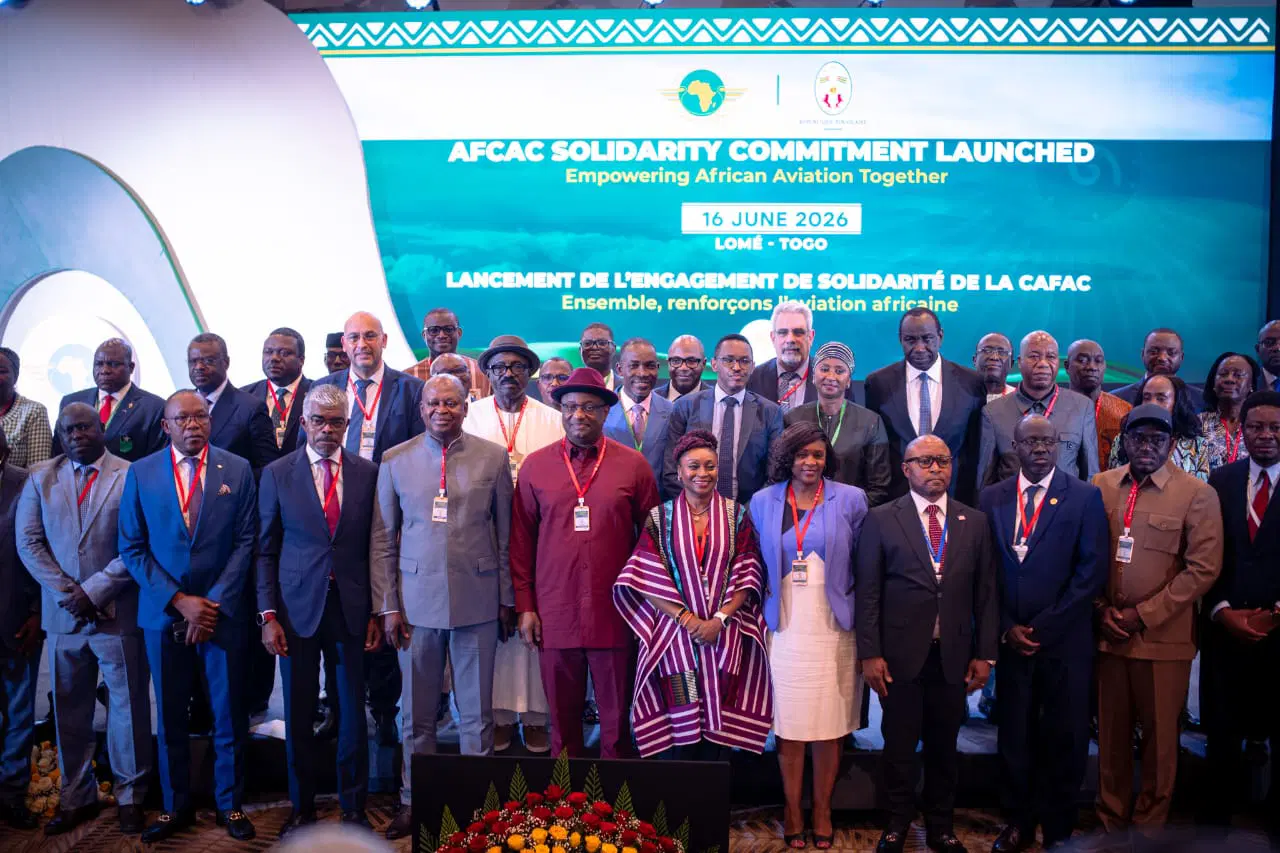
The Federal Government has introduced an aviation fee discount aimed at reducing operational costs for domestic airline operators as part of broader efforts to strengthen the aviation sector. The policy, described as an aviation fee discount, is expected to ease financial pressure on airlines while improving service delivery and competitiveness within Nigeria and across Africa.
The aviation industry in Africa continues to face high operational costs, regulatory charges, and infrastructure limitations that affect ticket prices and airline sustainability. Nigerian authorities have repeatedly called for reforms that would position aviation as a driver of economic growth rather than a revenue-focused sector. The Minister of Aviation and Aerospace Development, Mr Festus Keyamo, said the government is prioritising practical reforms to unlock Africa’s aviation potential and improve connectivity across the continent.
Speaking at the African Air Transport Expo 2026 organised by the African Civil Aviation Commission (AFCAC) in Lomé, Togo, Keyamo stated that Nigeria is implementing a 30 per cent aviation fee discount on statutory charges for domestic operators, with presidential approval. According to a statement by the Minister’s Special Adviser on Media and Communications, Tunde Moshood, Keyamo said the policy is part of a wider effort to reduce costs and improve efficiency in the sector.
He said: “Aviation is an economic enabler, not a revenue collection point. Nigeria is aggressively driving down costs through a 30 per cent discount on statutory fees for domestic operators approved by Mr. President, transitioning towards VAT neutrality, and auditing duplicate levies.” The minister further explained that Nigeria is working to streamline air transport systems across the continent, noting that enhanced market access is essential for economic growth, trade, tourism, and regional integration.
He added: “We must move from signatures to actual traffic rights. Over the next 24 months, Nigeria will streamline permits for African carriers, align air agreements, and lead the Banjul Accord Group, BAG, to progressively treat West Africa as a unified domestic market.” Keyamo also emphasised that African aviation must shift focus from policy declarations to measurable outcomes, including increased air routes and improved passenger access.
The aviation fee discount is expected to reduce financial pressure on domestic airlines, potentially leading to more competitive ticket pricing and improved operational efficiency. Industry stakeholders say such reforms could help strengthen Nigeria’s aviation sector while supporting broader continental integration efforts. The initiative also aligns with regional aviation goals aimed at improving connectivity, reducing barriers to air travel, and fostering economic collaboration among African countries.
The Federal Government says it will continue implementing reforms designed to reduce aviation costs and improve efficiency across the sector. Authorities also plan to streamline regulatory processes and expand air connectivity over the next 24 months as part of efforts to support domestic airlines and strengthen Africa’s aviation market.