




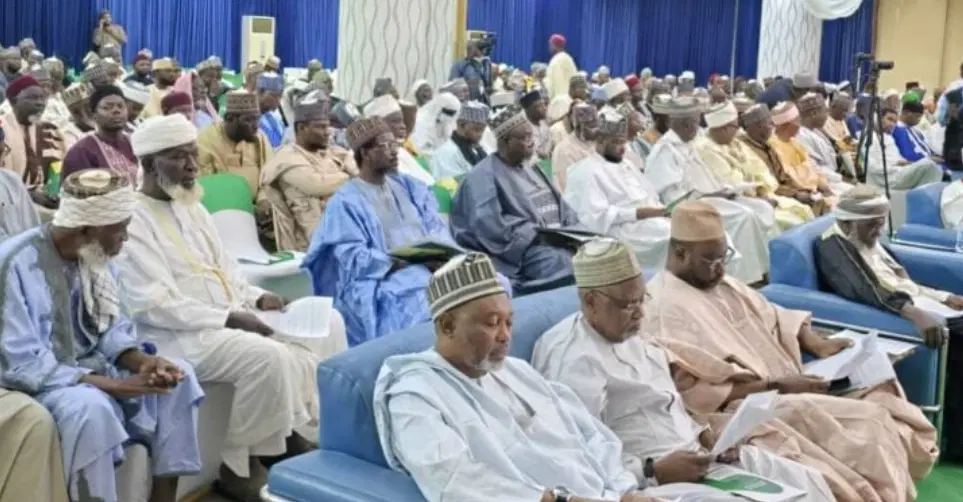
The Supreme Council for Shariah in Nigeria has rejected calls from United States lawmakers for Nigeria to end the practice of Sharia law, saying external pressure cannot compel cessation of its practice.
The statement by the council was issued in response to recommendations in a recent report submitted by United States lawmakers to the White House.
The report followed an investigation by members of the United States Congress into issues including alleged persecution of Christians in Nigeria.
Sharia law in Nigeria operates alongside statutory and customary law, and was formally adopted as a legal framework in 12 predominantly Muslim states in northern Nigeria in 1999.
In its statement, the Supreme Council for Shariah in Nigeria said Sharia constitutes a comprehensive way of life for Muslims that cannot be relinquished in response to external pressure, misinformation, or political intimidation.
The council was quoted saying no power or authority can compel Nigerian Muslims to abandon the practice of Sharia.
The council stressed that freedom of religion is protected under the Constitution of the Federal Republic of Nigeria, which allows citizens to manage personal and family matters according to their faith.
The statement said constitutional provisions support the operation of Sharia within the country’s legal framework.
The council also addressed assertions about targeted violence in Nigeria, describing claims of a “Christian genocide” as a misrepresentation of the nation’s security challenges.
It said issues such as terrorism, banditry, organised crime, and governance deficits affect all citizens regardless of faith.
The council concluded that Nigeria’s multi-religious society and plural legal system should be respected, and that external interference in matters of Sharia is unwarranted and counterproductive.
The Supreme Council’s response highlights the constitutional protection for freedom of religion and the role of Sharia law within Nigeria’s plural legal system.
The reaction also underscores differing views on how external proposals relate to Nigeria’s sovereignty and legal order.