





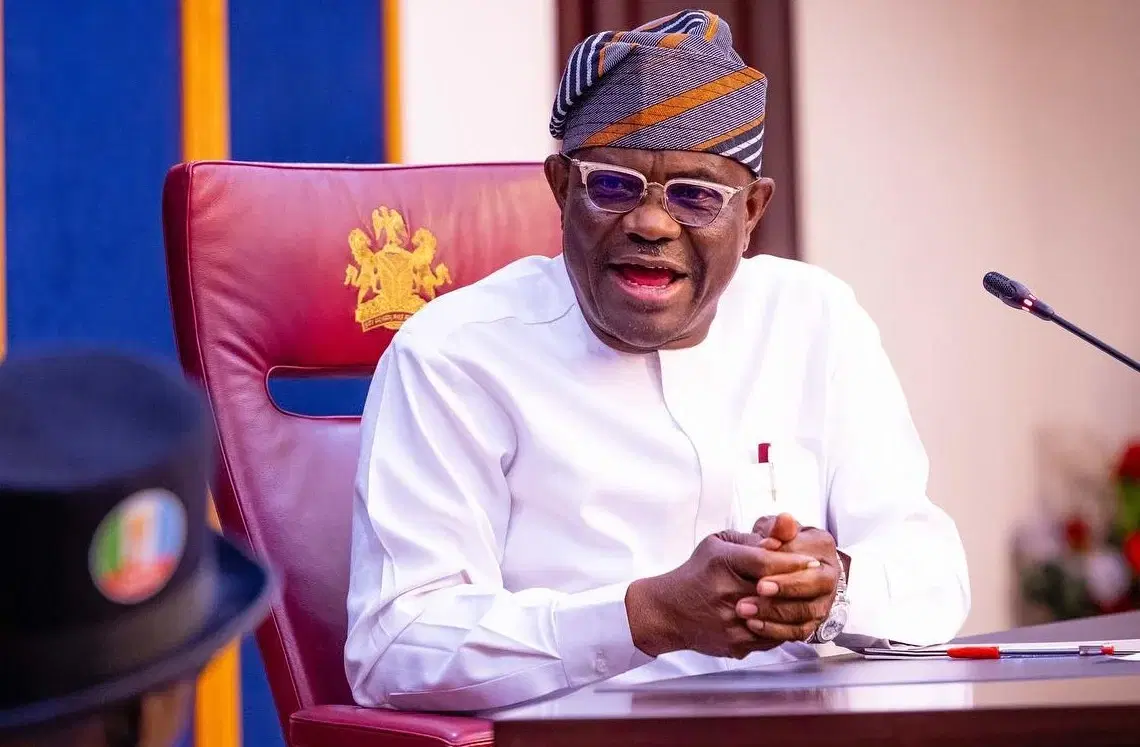
Former Rivers State Governor Nyesom Wike has publicly asserted that Governor Siminalayi Fubara lacks a robust political structure as the 2027 general elections approach, further observing that Fubara’s recent defection to the All Progressives Congress occurred “too late” to establish strong groundwork ahead of the polls.
Wike’s remarks come amid ongoing realignments within Nigeria’s political landscape, where both major and emerging parties are positioning for the next electoral cycle. His criticism underscores questions about internal party organisation, electoral strategy, and governance continuity in Rivers State, a key political theatre in the South‑South region.
Political analysts note that strategic organisation and grassroots mobilisation are central to effective political engagement. Robust political infrastructure — encompassing stakeholder networks, clear policy platforms, and communicative cohesion — supports parties and candidates in articulating visions, engaging voters, and navigating electoral procedures. Delayed realignment or structural weakness can undermine these processes, limiting influence and effectiveness over time.
The timing of Fubara’s defection to the APC raises broader considerations about the strategic calculus that informs political movement across party lines. Defections, while constitutionally permitted, carry implications for party coherence, voter perception, and institutional stability. For governance observers, the effectiveness of such transitions depends not only on individual repositioning but also on the ability to integrate into new political frameworks with clear governance objectives and operational capacity.
Wike’s critique also reflects the competitive dynamics of Nigerian federalism, where subnational leadership often intersects with national political aspirations. Rivers State, with significant economic and demographic weight, remains a focal point for national political actors. Public commentary from influential figures like Wike signals ongoing negotiations of influence, authority, and organisational strength within and across party structures.
Assessment of political readiness ahead of national elections typically considers practical preparedness — including policy articulation, party coherence, and administrative execution. Beyond rhetoric, these elements influence public confidence and can affect voter engagement and turnout. Institutional mechanisms, such as electoral commissions and party oversight bodies, monitor compliance with electoral regulations to ensure that political activities align with democratic norms.
The broader implications for governance are notable. Political transitions and criticism of organisational readiness draw attention to institutional capacity and public expectations of leadership. As political actors articulate positions and critique rivals, the national discourse increasingly emphasises clarity of purpose, policy direction, and commitment to democratic principles.
Public access to information about political repositioning supports transparency and informed citizen participation. Clear documentation of defections, party realignments, and organisational statements contributes to an informed electorate capable of evaluating leadership qualities and strategic positioning.
In conclusion, Wike’s commentary on Governor Fubara’s political structure and the timing of his APC defection underscores wider themes in Nigerian politics: strategic preparation, organisational capacity, and the interplay between subnational leadership and national ambitions. As the 2027 election cycle unfolds, these considerations will inform not only political engagement but also public confidence in governance and democratic integrity.
This analysis points to the importance of robust political infrastructure, transparent communication, and timely strategic planning — all essential elements for effective participation in Nigeria’s evolving democratic process.