




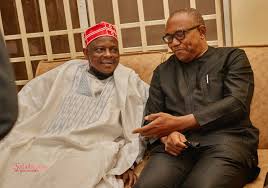
Supporters of Senator Rabiu Musa Kwankwaso, National Leader of the New Nigeria Peoples Party (NNPP), have proposed a joint presidential ticket pairing Kwankwaso with former Anambra State Governor Peter Obi ahead of the 2027 general election, political groups in Kano said.
Political movements and support groups often propose alliances among leaders from different regions or parties in Nigeria ahead of major elections as part of broader discussions about coalition building and national leadership options.
Kwankwaso, a former governor of Kano State and past presidential candidate, and Obi, a former Labour Party presidential candidate in 2023, are prominent figures in the country’s political landscape.
Supporters of both figures have expressed interest in combining regional strengths—Obi’s base in the South and Kwankwaso’s influence in the North—to form a nationwide political coalition for the 2027 polls.
Speaking in Kano, Abba Sadauki Gwale, representing Kwankwaso support groups, said the proposal was driven by the belief that a joint ticket could offer a national platform capable of appealing across regional divides and offering an alternative to the ruling All Progressives Congress.
Gwale stated that supporters believe combining Obi’s southern support base with Kwankwaso’s strong grassroots presence in the North could create a broad political coalition.
He said the proposed ticket could emerge under any political platform that facilitates it.
He added that both individuals have, in the view of supporters, prioritised policies aimed at improving conditions for ordinary Nigerians, and that the proposed alliance reflects a collective desire for political change.
Gwale also addressed rumours regarding Kwankwaso’s political alignment, stating that claims about him considering joining the ruling All Progressives Congress were not aligned with supporters’ views, and that Kwankwaso continued to enjoy grassroots backing.
The proposal for a joint Obi–Kwankwaso ticket reflects ongoing discussions among political activists and support groups about potential opposition alliances ahead of the 2027 general election.
Such discussions occur amid broader efforts by various political actors to build national coalitions and explore strategies to appeal to diverse voter blocs across Nigeria.
Though originating from supporters rather than official party structures, the proposal highlights the diversity of political voices and coalition aspirations shaping Nigeria’s pre-election environment.